Get Full Government Meeting Transcripts, Videos, & Alerts Forever!
Get email alerts on the School Budget topic
No spam. Unsubscribe anytime.
Bennett School District reviews balanced 2025–26 budget, proposes one-year disaster tax to cover storm damage
Summary
At an Aug. 18 workshop the Bennett School District Board of Trustees reviewed a final 2024–25 amendment and a proposed 2025–26 general fund budget that officials said would be balanced at about $153.3 million, and discussed a one-year “disaster pennies” tax increase to help pay for an estimated $3.9 million in storm damage.
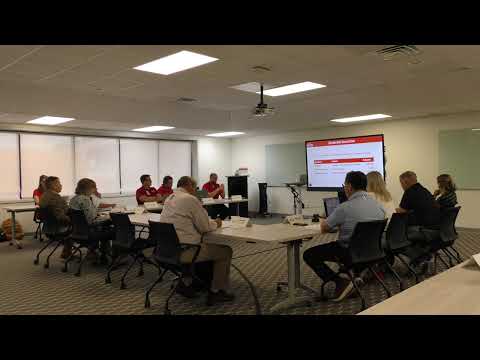
At a workshop Monday, Aug. 18, 2025, the Bennett School District Board of Trustees reviewed its final amended 2024–25 budget and the proposed 2025–26 budget, and discussed a one-year temporary tax increase to help cover an estimated $3.9 million in storm damage, district officials said.
Dr. Taylor, staff member, said the district began preparing the 2025–26 budget in early 2024 and used a budget advisory committee before adopting budget assumptions in February 2025. Melissa, staff member, presented the detailed figures and told the board, “This is our final budget workshop for the 25–26 school year.”
The presentation showed the district’s final 2024–25 amendment (amendment No. 11) projecting roughly $144 million in revenues and $153 million in expenditures for a $7 million deficit in 2024–25, with an expected year-end general fund balance of about $30,816,712, or roughly 20 percent of operating expenditures. For 2025–26 the district staff proposed a balanced general fund with revenues and expenditures each of $153,309,901.
Board members and staff discussed tax-rate mechanics under state law. Melissa said the district is proposing a maintenance and operations (M&O) rate of 0.7552 and an interest and sinking (I&S) rate of 0.3625 for a total proposed tax rate of 1.1494. Staff also proposed adding 0.0317 (3.17 pennies) in one-year “disaster pennies” to the M&O portion to help cover storm-related repairs to roofs and HVAC systems. The district noted that, under Tax Code section 26.042(e), the district can adopt a rate that exceeds the voter-approval tax rate for one year to levy disaster pennies without a voter-approval election.
Melissa told the board the district has identified approximately $3,900,000 in storm-related roof and HVAC damages and that the district’s insurance deductible for the event was $1,000,000. Board discussion noted the district is seeking disaster grants and other reimbursements; staff said any grant awards (a NOGA or notice of grant award) would be used to amend the general fund later.
Staff described key revenue and expenditure drivers for 2025–26: an anticipated House Bill 2 salary increase (staff presented sample amounts of $2,500 for teachers with three to four years of experience and $5,000 for teachers with five or more years, a 1 percent increase for nonteaching staff, and a $0.50 per hour raise for certain auxiliary and professional staff), an expected basic allotment increase of $55 to $6,215, and an estimated House Bill 2-related funding increase of about $7.5 million that staff said would be refined as state templates are finalized. The presentation also noted reclassifications required under generally accepted accounting principles, TRS (Teacher Retirement System) on-behalf adjustments and capitalization of subscription-based technology items.
The board also reviewed specific program budgets. Under the Texas Education Code’s accelerated-instruction requirement, the district said it budgeted compensatory-education funds for accelerated instruction materials and staff. School nutrition staff presented a multiyear plan: the nutrition fund was adopted for a near $1.9 million deficit for 2024–25 and staff projected coming in about $1 million over budget for that year; the proposed 2025–26 nutrition budget includes a $1.2 million planned deficit intended to reduce the fund balance toward the Texas Department of Agriculture’s target of roughly three months’ operating reserves and to comply with required spend-down plans submitted to the department.
Staff reported the debt-service fund is expected to show a surplus (estimated about $3.7 million), which would leave the debt-service fund balance near $16 million and give the district flexibility to maintain tax rates if bonds are approved. Staff cautioned the state’s hold-harmless and related calculations affect the district’s debt-service template and that accelerated debt paydown in some cases can trigger reductions in state hold-harmless support.
Dr. Taylor thanked staff and the committee for work to reduce a larger multi‑million-dollar gap identified 18 months earlier, and said the district will continue work on the 2026–27 budget because preliminary Legislative Budget Board runs project approximately $1 million less state funding in the second year of the biennium.
No formal vote was taken on the 2025–26 budget or tax rate at the workshop. Melissa told the board amendment No. 11 will appear on the consent agenda for action later in the meeting, and staff said they will open the required public hearing for discussion of the budget and tax rate at the next step in the meeting process.
The district’s staff presentation and board discussion included repeated references to the possibility of federal Title funding reductions; staff said reductions have been built into the current general fund numbers until an approved notice of grant award is received. Board members asked about the size of the disaster request, insurance deductibles and how the disaster pennies would be allocated in the budget (staff said those dollars are programmed largely to capital/contracted services line items for repair and reimbursing amounts already advanced).