Get Full Government Meeting Transcripts, Videos, & Alerts Forever!
Get email alerts on the Procurement topic
No spam. Unsubscribe anytime.
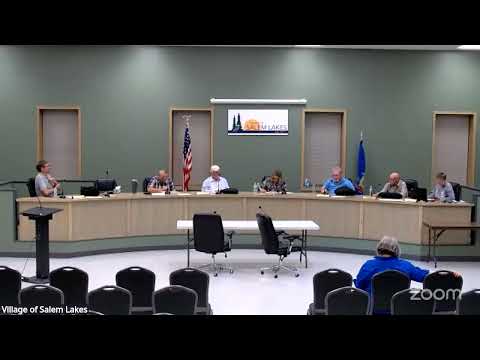
Trustees delay vote on updated purchasing policy after debate over $5,000-$25,000 threshold and emergency language
Summary
The board discussed changes to the village purchasing policy that would allow department heads to authorize purchases under new thresholds and introduced emergency carve-outs; trustees asked staff to add explicit emergency language and ultimately tabled final approval.
Trustees debated a proposed revision to the Village of Salem Lakes purchasing policy that would set purchase authorization thresholds and incorporate portions of Wisconsin's statutory bidding law. Finance staff said the draft policy creates tiers: small purchases (under $5,000) would be approved by the department head; purchases greater than $5,000 but less than $25,000 could be authorized in writing by the village administrator, public works director, or fire chief; and higher tiers would require board action or formal bidding as provided by state law. Trustees expressed broad agreement that emergency procurement authority is necessary but disagreed over the non-emergency threshold at which multiple bids are required. Several trustees insisted the policy should require multiple competitive bids for purchases greater than $5,000 unless the purchase is an emergency; others argued the administrative tiers are needed to allow department heads to act in routine, lower-dollar situations. Staff said the policy already contains an emergency definition and carve-outs that mirror Wisconsin statutory exceptions for bidding, but board members asked for clearer, written emergency wording. During discussion, trustees and staff cited an example in which going to competitive bid saved the village $4,000 for an equipment mulching head earlier in the year. Several trustees asked that the policy be revised to require multiple bids for equipment and services above $5,000 unless an emergency condition (substantial and immediate danger to health, life or property, or serious impairment of a department's normal operations) has been declared and documented in writing. After discussion, a trustee moved to table the purchasing policy for rewording to explicitly include emergency exceptions and clarify when multiple bids are required; the motion to table was seconded and carried. Staff will return a redlined draft showing the emergency wording and the board's requested thresholds.