Get Full Government Meeting Transcripts, Videos, & Alerts Forever!
Get email alerts on the Jail Facility topic
No spam. Unsubscribe anytime.
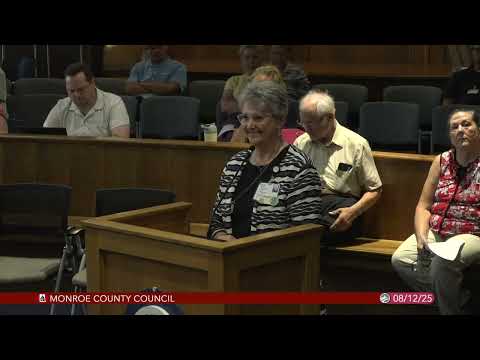
ACLU legal director warns Monroe County jail still fails constitutional standards; settlement nearing potential expiration
Summary
The ACLU’s legal director reviewed years of litigation and a long-running private settlement over jail conditions, told the council the county needs a new facility, and noted the settlement could expire in January 2026, which could reopen litigation risks.
Kim Faulk, legal director for the American Civil Liberties Union, gave the Monroe County Council a detailed history of litigation over jail conditions and urged the county to plan for a replacement facility that meets constitutional standards. Faulk summarized litigation that began with a 2008 complaint alleging overcrowding and inadequate inmate care; he said a private settlement agreement that limited population and required recreation has been renewed annually and helped avoid new conditions litigation. “The agreement we had was set to expire in 02/2011, but we have renewed it ever since every year while the county has moved towards building a new facility,” Faulk told the council. Faulk and councilors discussed the gap between the number of beds and functional capacity; Faulk quoted experts saying jails become effectively overcrowded at roughly 80% of listed bed capacity and cited a 2021 Monroe County criminal-justice and incarceration study that recommended more beds and other design changes. “You need a new jail,” Faulk said, adding that building a jail that is overcrowded on day one is unwise. Councilors pressed Faulk on what the settlement requires and how the county can meet both legal and operational standards. Faulk summarized the settlement as “bare bones,” noting it sets a population cap (the settlement’s bed count has been the controlling number) and requires recreation; he described the agreement as “not meant to be a permanent solution.” Faulk said the settlement can be extended if all parties agree but warned that if it lapses the county could face new litigation. Council staff and Faulk discussed the possibility of continued extension to preserve stability while the county pursues a long-term solution. Why it matters: the county’s correctional facility and the settlement both affect operations, liability, and capital planning. Faulk’s presentation framed the legal risk if the settlement ends and emphasized design and operational standards that new jail construction would need to meet. Next steps: councilors and staff said they will continue the multi-agency planning process that includes exploration of diversion and community alternatives as well as capital options for a replacement facility. Faulk offered to provide a list of counties that have undertaken similar efforts and to talk further about benchmarks and design standards.