Get Full Government Meeting Transcripts, Videos, & Alerts Forever!
Get email alerts on the Ndot Operations topic
No spam. Unsubscribe anytime.
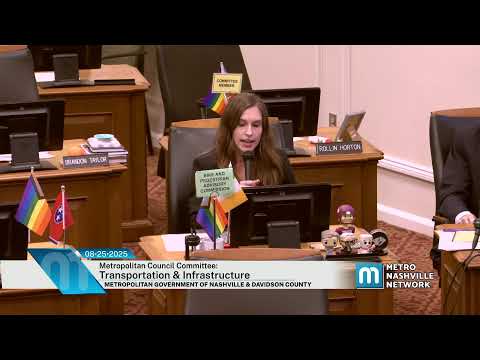
NDOT outlines safety work, high-injury network and operational limits; staff and funding identified as bottlenecks
Summary
NDOT Director Diana Alarcon described the department's work on Vision 0, the high-injury network, the traffic management center and quick-build programs; she said staffing, procurement rules and the capital-versus-operating budget structure limit how fast some safety projects can be delivered.
The Department of Transportation and Multimodal Infrastructure (NDOT) told council and advisory committees it is using a Safe Systems approach to address a high-injury network that disproportionately concentrates deaths and serious injuries, but department leaders said staffing, capital funding rules and procurement timelines slow some work.
Director Diana Alarcon said NDOT has adopted a Vision 0 framework that identifies a high-injury network where roughly 6% of roads account for about 60% of traffic deaths and serious injuries. NDOT has pursued a package of engineering and programmatic tools described in the Vision 0 Action Plan: pedestrian hybrid beacons (HAWKs), leading pedestrian intervals, quick-build safety improvements, protected bikeways, sidewalk construction and targeted speed management.
Alarcon said NDOT opened a new Traffic Management Center in October 2024 and asked the public to report malfunctioning traffic or pedestrian signals through Hub Nashville (the city's 311/ticketing system). "Once it gets into HUB, it is sent over to our traffic management system center," she said, noting that prior to the TMC the city had less ability to move in real time. The director said NDOT is upgrading signal technology and aims to move roughly two-thirds of signals into an adaptive, fiber-connected system funded in part through the Choose How You Move program and grants.
NDOT staff described how funding rules affect delivery. Alarcon said Vision 0 funding has been routed through the capital spending plan (CSP), which generally requires consultants and external procurement for capital projects; that requirement can slow timelines. She gave the example of a HAWK beacon project where consultant design timelines were measured in many months and where NDOT temporarily reallocated staff and equipment to complete school safety zone markings in-house after surmounting procurement timing issues. The department has procured or is finalizing an IDIQ consulting roster to expand consultant capacity and said some work (for example, routine striping and repeated-standard installations) can be moved into the department's operating budget when possible.
Val Martinez, NDOT planner and Vision 0 coordinator, described the department's rapid response after serious crashes: MNPD preliminary reports are received within hours, and NDOT planners and engineers aim to inspect sites quickly for maintenance-level quick builds such as signage, striping and delineators. Martinez said longer-term or larger-capital remedies are wrapped into larger projects because of funding rules and stormwater or utility considerations.
Why it matters: NDOT said it is prioritizing the high-injury network and has new tools and dedicated funding (Choose How You Move) to accelerate work, but said in-house capacity, procurement rules tied to capital spending and the complexity of retrofitting older streets are the principal constraints to faster project delivery. Staff said clearer partnership with commissions and clearer, earlier project touchpoints would help advisory bodies provide useful input and speed implementation.