Get Full Government Meeting Transcripts, Videos, & Alerts Forever!
Get email alerts on the Traffic Enforcement And Process topic
No spam. Unsubscribe anytime.
Traffic & Parking commissioners press for clearer timelines, better data and faster enforcement
Summary
Members of the Traffic and Parking Commission told council and NDOT they need earlier staff reports, clearer inter-commission coordination and quicker responses to dangerous locations; commissioners raised questions about enforcement and the Manual on Uniform Traffic Control Devices (MUTCD).
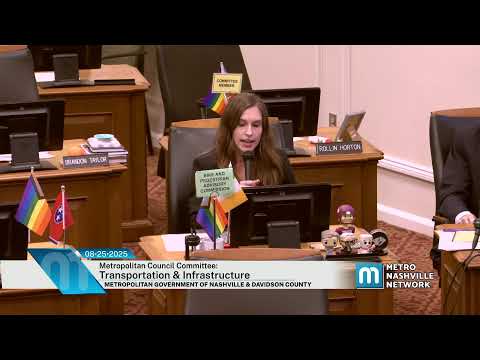
Traffic and Parking Commission leaders and members told a joint session with council and NDOT they frequently lack timely staff reports, sustained enforcement at high-risk locations and clearer communication about how engineering decisions are made.
Brandon Mason, chairman of the Traffic and Parking Commission, described the commission's chartered role and urged more collaboration among commissions and departments to prioritize pedestrian safety. "Pedestrian safety was paramount," Mason said, recalling prior commissioners who emphasized public trust and safety as the commission's core responsibilities.
Vice chair Robert Gibbs and other commissioners asked for a public list of the city's most dangerous intersections, an explanation of NDOT's process for choosing project priorities and a timeline for how NDOT advances selected locations. Commissioners and council members said commission staff reports sometimes arrive too close to meetings to allow members time to inspect locations and provide informed feedback, and they asked NDOT and council staff to circulate drafts earlier.
Commission members also raised enforcement gaps. Vice chair Gibbs asked how the city could respond more effectively when cars block bike lanes or park illegally in no-parking zones; commissioners said Hub Nashville reports often record "gone on arrival" when enforcement arrives after the vehicle is no longer present. Several commissioners recommended more proactive enforcement paired with infrastructure that prevents repeated violations.
Council members and commissioners also asked for clarity about technical requirements that affect decisions. Council member Coopin asked for an explanation of the Manual on Uniform Traffic Control Devices (MUTCD) and how engineering warrants affect stop-sign and signal installations; commissioners were told engineers must generally follow MUTCD warrants but that local engineering judgment and policy adjustments can be used in some locations (for example, sight-distance or proximity to parks or schools) to justify treatments.
Why it matters: Commissioners said faster access to data, earlier circulation of staff reports, clearer cross-commission coordination and more predictable enforcement will allow them to provide better recommendations and to help NDOT move from study to action on safety projects.