Get Full Government Meeting Transcripts, Videos, & Alerts Forever!
Get email alerts on the Employee Benefits topic
No spam. Unsubscribe anytime.
Parkway benefits committee recommends package of plan changes to close $10.4 million self‑insurance shortfall
Summary
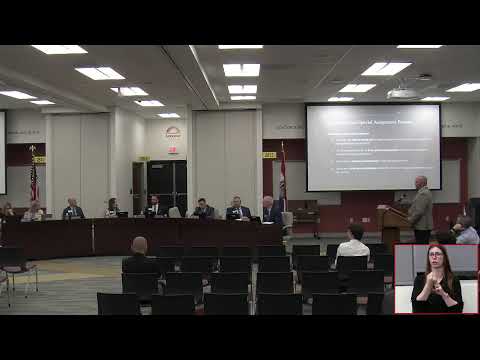
At the Parkway Board of Education work session on Aug. 6, Chief Financial Officer Carrie Nunn and members of the district's Benefit Advisory Committee outlined recommended changes to the district's self‑funded health plan intended to close a $10.4 million projected shortfall for plan year 2026.
At the Parkway Board of Education work session on Aug. 6, Chief Financial Officer Carrie Nunn and members of the district's Benefit Advisory Committee outlined recommended changes to the district's self‑funded health plan intended to close a $10.4 million projected shortfall for plan year 2026.
The recommended package, which the benefits committee voted to endorse, includes a 25% increase in the district contribution to premiums, a 15% increase to employee premiums, a new $100 monthly charge on the district's base (formerly $0) plan at the employee‑only level, higher deductibles and out‑of‑pocket maximums on the base and high‑deductible plans, elimination of a premium plan option, and removal of GLP‑1 weight‑loss coverage except when prescribed for diabetes. "We needed to find savings of $10,400,000," Carrie Nunn told the board, describing the self‑insurance fund as a single "bucket" of revenue and expenses. The Benefit Advisory Committee's voting members selected the option described above by a large margin when it voted in late July.
Why it matters: Parkway is self‑insured, meaning the district pays members' claims directly and uses stop‑loss insurance for catastrophic cases. Nunn said plan year 2024 produced a large loss (about a 14% claims increase and a more than $6 million plan‑year loss) and that without change the fund would be depleted. The district previously contributed $2.5 million in April and a $5.0 million one‑time contribution later in the year to shore up the fund; even with those injections Nunn said projections showed the fund ending 2025 at roughly $1.8 million under the plan assumptions. The district's stated target reserve is 25% of annual claims, about $12.7 million.
Key facts and committee reasoning: Nunn told the board the self‑insurance "bucket" is funded primarily by district contributions ($30.6 million forecast for plan year 2025) and employee premiums ($8.3 million), with rebates and interest making up additional revenue (she cited about $3 million in rebates from ESI). Expenses are dominated by claims; the district carries stop‑loss coverage that begins at $375,000 per claim. The Benefit Advisory Committee met four times over the summer, ran a bucket exercise to model options and heard results of a districtwide thought exchange that drew roughly 600 participants and more than 500 written ideas. Warren McCracken, president of Parkway NEA and a committee member, described the vote as choosing "the best of the worst" and urged the board to consider the committee's effort as reflecting heavy, often uncomfortable deliberations by staff. Committee member Mel Schulte said the group sought a solution "acceptable for everyone in the district," while acknowledging new educators and lower‑paid employees would face greater burden from some changes.
What the recommended option would change for employees: Under the committee's recommended option, the base plan would no longer be free at the employee‑only level; Carrie Nunn said that change equals about $50 per pay period for an employee on the base plan plus the 15% premium increase on top of that. Nunn said the high‑deductible plan would remain available at no per‑paycheck cost to employee‑only participants. The committee projected that eliminating GLP‑1 weight‑loss coverage (while keeping coverage when GLP‑1 prescriptions are for diabetes) would save roughly $1.2 million; consolidating from three plan options to two (removing the premium plan) was estimated to save about $430,000.
Decisions and next steps: The Benefit Advisory Committee voted to recommend the option described above (the committee reported 19 responding votes, with about 79% selecting that option). The board did not take a formal vote on benefits at the Aug. 6 meeting; Nunn presented the recommendation and opened the floor for board questions. Trustees asked about comparative district benefits, the number of participants in the premium plan (Deb Nolan, benefits coordinator, said about 230 employees were on the premium plan as of July 8), whether price increases would make Parkway less competitive, and whether alternative models such as tiered premium contributions by salary were feasible. Nunn said tiered employee premiums are legal and possible but would require more administrative work and likely additional study beyond the timeframe for a January 1, 2026 plan change. Superintendent Schneider told the board she will convene a budget task force; Nunn said the district will continue to analyze long‑range options and may return with phased plans.
What is not decided: No board vote occurred on Aug. 6. The committee's recommendation is advisory; any final plan changes and effective dates must be brought back to the board for approval before implementation.
Ending: Board members thanked the committee and staff for summer work and indicated they expect the benefits recommendation to be part of forthcoming budget discussions in the fall and winter.