Get Full Government Meeting Transcripts, Videos, & Alerts Forever!
Get email alerts on the School Technology topic
No spam. Unsubscribe anytime.
District technology director updates board on devices, Libo ID rollout and student safety monitoring
Summary
The district reported device counts, low uptake of the equipment protection plan, rollout of Libo ID/ClassLink single sign‑on, and monitoring statistics from GoGuardian and Gaggle.
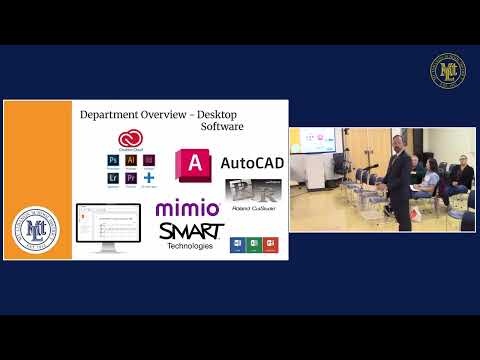
Mister Stengel, technology presenter for the district, gave a broad update Sept. 8 on hardware, software, network projects and student safety tools, reporting current device counts, equipment protection plan participation and monitoring incident counts.
Stengel told the board that the district issues iPads to kindergarten and first grade, Chromebooks to grades 2–5 and operates a BYOT (bring‑your‑own‑technology) expectation for secondary students. He said about 2,425 elementary devices are deployed districtwide and that middle school students borrow devices at a rate of about 88%, with roughly 68% of high‑school students borrowing district devices.
On the district equipment protection plan (EPP), Stengel said EPP costs $50 and that, as of the presentation, about 28% of elementary devices and about one‑third of secondary devices were covered. He urged families who have not enrolled to watch for his email reminders and noted Oct. 1 as a cutoff for the program year.
Stengel summarized network and infrastructure work: the three‑year network switch replacement project was completed this summer; the district maintains on‑premises servers and backups as well as cloud backups; and a recent small data loss was recovered using those systems.
On single sign‑on, Stengel and other staff described Libo ID (ClassLink) as the district’s new family and staff dashboard that replaces prior Google‑based authentication that required YouTube access. He said Libo ID now hosts links to district newsletters and provides single sign‑on to PowerSchool, Schoology and other systems.
Regarding student safety and content monitoring, staff described the combined use of GoGuardian for web filtering and a GoGuardian Parent product families may subscribe to, together with Gaggle, which staff said performs human review on flagged content. Stengel reported that last school year 346 unique parents signed up to monitor 552 students via GoGuardian Parent. Staff also reported 51 high‑severity Gaggle incidents and about 671 medium‑severity incidents for the same period; high‑severity cases trigger alerts to district staff and, when appropriate, Mount Lebanon police for welfare checks.
Other items in the update included continued use of Google Workspace (the district is a Google‑recognized district), cloud plugins for PowerSchool (Naviance, SchoolMessenger and others), Alcatel‑Lucent telephone systems on‑premises with SIP trunking reducing call costs, a distributed antenna system improving cell service at the high school and Hoover, and ongoing capital needs including auditorium sound, non‑LED stage lighting replacement and eventual phone replacements across older buildings.
Stengel gave an estimate for capital technology needs (excluding telephone estimates) in the mid‑single to low‑single‑digit millions: approximately $7.8 million to $8.5 million over multi‑year replacement cycles. He described classroom and infrastructure lifecycle replacement planning and said the technology team will continue outreach to families, including a “Lebo University — technology edition” series of parent training sessions covering Libo ID, GoGuardian, Schoology and device tips.
The board asked follow‑up questions about increasing EPP enrollment and whether districts mandate EPP; Stengel and other staff said EPP is currently optional, enrollment must be renewed annually, and some administrative steps are needed to streamline the sign‑up and payment portal.