
Lake Wales board adopts package of 2025 legislative‑mandated school policies
Get AI-powered insights, summaries, and transcripts
Subscribe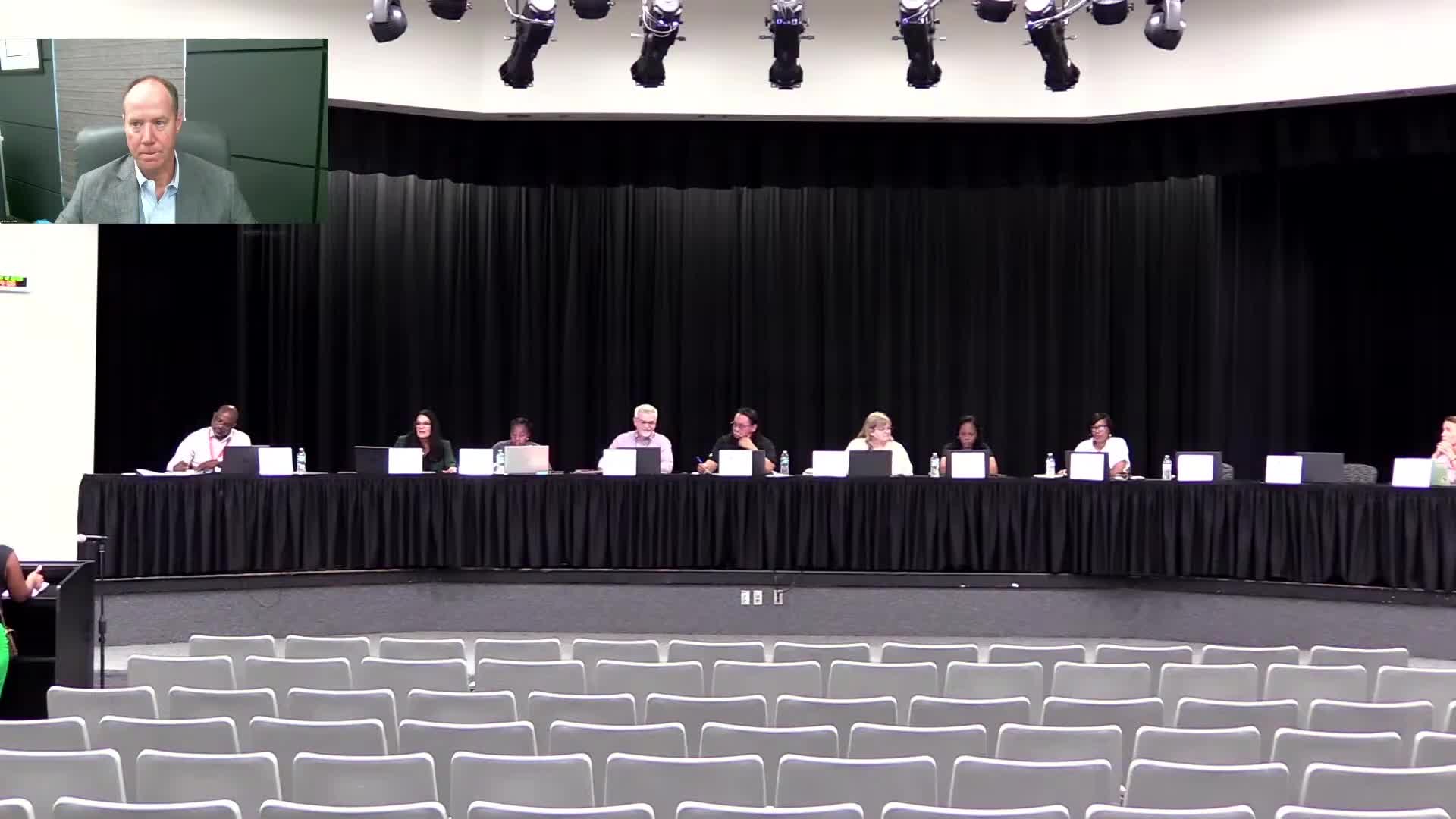
Summary
Lake Wales Charter Schools’ governing board on Aug. 12 adopted a set of policies the district’s legal counsel said were required or clarified by the 2025 Florida legislative session.
Lake Wales Charter Schools’ governing board on Aug. 12 adopted a set of policies the district’s legal counsel said were required or clarified by the 2025 Florida legislative session.
The policies were presented by Sean Arnold, the system’s general counsel, who told trustees, “So we have before you 4 policies that were set up by the legislature this year, that were mandated to be enacted.”
Why it matters: The package aligns Lake Wales Charter Schools with recent state law changes that affect classroom routine, employee conduct and internal governance. The board approved the suite of policies by voice votes during the regular meeting that followed the work session.
What the policy package covers: Arnold summarized the main elements for trustees. The cell phone policy restricts use for K–8 students and permits limited, teacher‑directed use in high school; it also includes narrow exceptions for medical needs and Individualized Education Program (IEP) accommodations. He said, “There are exceptions…students who need it for a health, safety, and welfare reasons…There may be a reason for it to be included in an IEP.”
On teacher arrests, Arnold said the law now requires teachers to report certain arrests within 48 hours and obliges schools to remove a teacher from the classroom for at least 24 hours when the teacher is arrested on a felony or specified misdemeanor while the case is pending.
The threat management policy updates school‑based behavioral threat assessment teams, documentation standards and coordination with law enforcement and health professionals; some parts take effect immediately and other provisions phase in later in the calendar year, Arnold said. He described the student welfare policy as largely a clarification of recent statutes about parental notification and procedures for concerns such as instructional materials and classroom instruction, and said the change creates a framework for school‑ and district‑level resolution and, if unresolved, potential litigation.
Trustees asked clarifying questions during the work session. One trustee asked whether the new policies were effective immediately; Arnold replied they would be effective if the board adopted them that day and noted the statutory changes were already in force. Trustees also asked how the ESOL/reading endorsement requirements apply to elementary and ESE staff; a staff member clarified staff who lack an endorsement would not automatically be covered by the adjunct provision discussed separately.
On nepotism and disclosure, counsel presented a system policy aligned to Florida charter law restricting employment or direct supervision of close relatives and proposing an annual attestation by trustees disclosing any relatives employed by the charter system and affirming that the trustee did not participate in hiring, evaluation, dismissal, or management of that relative. Arnold said the attestation is meant to “satisfy the statute” and increase transparency.
Adjunct teacher certification: Trustees discussed a draft adjunct‑teacher policy that would allow an individual who has passed the subject‑area portion of Florida certification but not other exam components to remain as a classroom teacher under limited conditions rather than be reassigned to a substitute role while they complete remaining certification elements.
Board action: During the regular meeting the board moved, seconded and approved each policy (cell phone; instructional employee arrest; threat management; student welfare; compliance with Florida statute limiting employment of relatives; adjunct teacher certification). Motions were moved and seconded by trustees as recorded at the meeting; the chair called for voice votes and each motion was adopted. (The meeting minutes show the policies were approved by voice vote with no recorded roll‑call dissent.)
Implementation and next steps: Counsel and staff said the policies will be distributed systemwide for implementation and that some elements will require coordination with the sponsor district (Polk County) and Florida Department of Education approvals where the statute or rules require it. The board did not amend the legal citations provided by counsel, and trustees asked staff to provide a plain‑language summary for employees and families.
Ending: Trustees thanked counsel and staff for producing the draft policies. Several trustees expressed appreciation for the legal review and indicated they expected administrators to conduct training and provide materials to principals and teachers so the new rules are applied consistently across the seven schools.