
Parents, advocates demand investigation after allegations against Rialto Unified teachers
Get AI-powered insights, summaries, and transcripts
Subscribe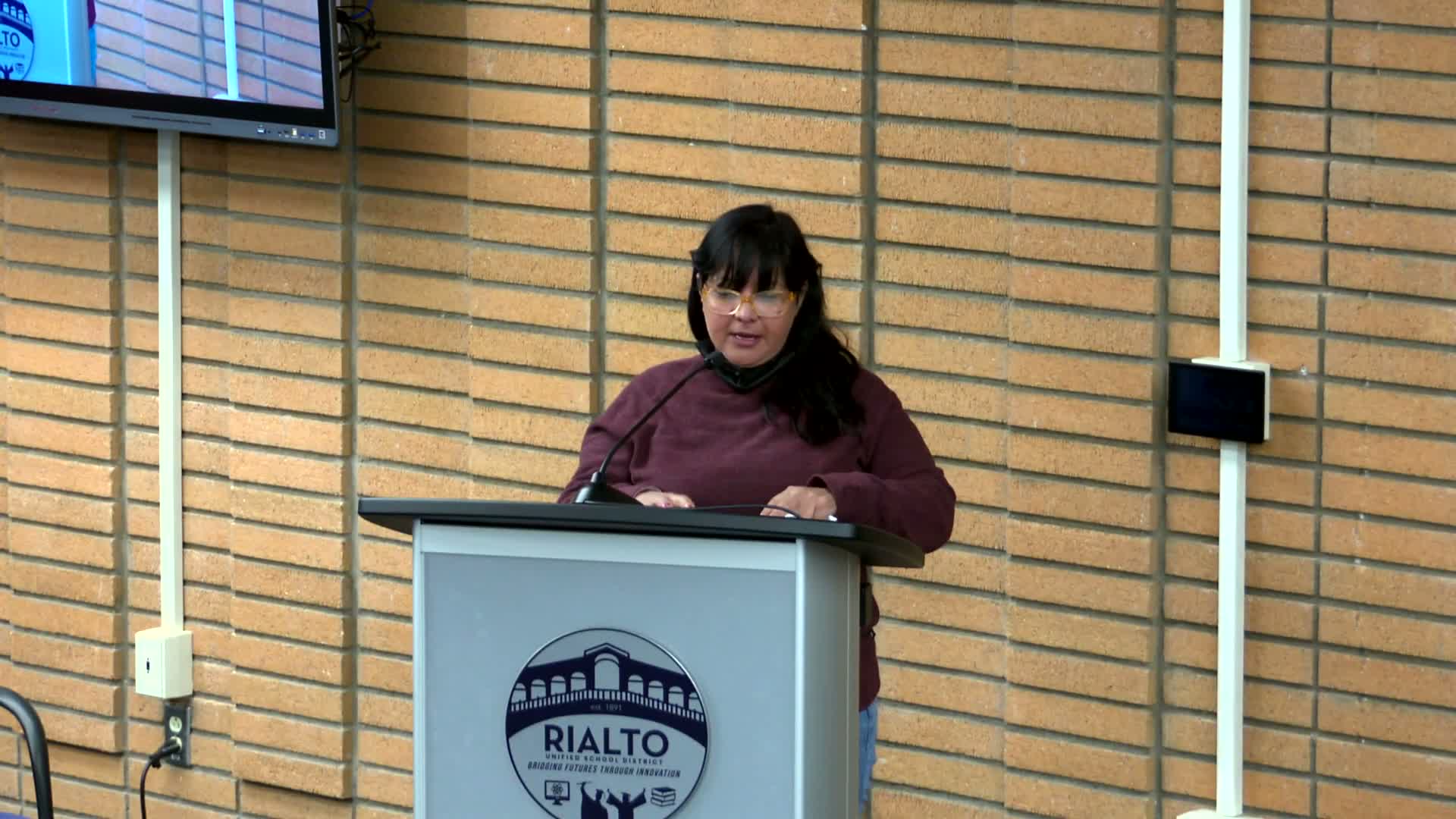
Summary
At a Feb. 12 special meeting, parents and community members urged Rialto Unified trustees to investigate allegations that two former Rialto High School teachers harmed students, criticized a pattern of staff transfers and urged accountability. The board held closed session on personnel matters and later reported it had taken no action.
Rialto, Calif. — Parents, alumni and community advocates urged the Rialto Unified School District Board of Education on Feb. 12 to investigate allegations that two teachers at Rialto High School harmed students and that district processes have allowed accused staff to remain or move between sites.
Several speakers at the district’s special meeting read letters and recounted experiences they said involved Michael Montano and Gabriel Quinones, and asked the board to pursue transparent investigations and accountability.
Advocates said the allegations date back years and that families and staff have feared retaliation for speaking up. The group’s concerns prompted the board to go into closed session to discuss personnel matters under Government Code section 54957; the board later reported it had taken no action.
“Staff members are afraid to speak up, and parents are afraid not only for potential retaliation, but because they lost trust that the proper actions will never be taken,” said Marner Reese, who identified themself as a parent and community member. “This culture of fear and silence must end.”
Anna Gonzales, identifying herself as a Rialto Unified parent, alum and former district employee, read a letter she said was sent by Charisma Flores alleging exploitation by two teachers while Flores was a minor. Gonzales said victims who come forward have not always seen accountability. She told the board, “We must not allow teachers in the district to get away with harming and exploiting students.”
Leticia Chavez, who said she is an alum and student advocate, described how closed-session reviews work and warned against what she called “pass the trash,” a practice she said districts use to move problematic employees between schools rather than remove them. “What is being allowed to happen is a little thing called pass the trash,” Chavez told the board, adding that she and others are compiling names and documentation.
Frank Montez said complaints have been filed with the Department of Justice and the U.S. Department of Education. “We filed the complaint with the Department of Justice, Department of Education,” Montez said, urging federal review.
The board convened a closed session that the public comment period indicated would address employee discipline and labor negotiations. After reconvening in open session, the board’s public statement said it “took no action in closed session” and that, due to employee privacy rights, it would not comment on personnel issues discussed there.
Materials distributed or presented at the meeting are available on request from the superintendent’s office, the board noted.
Speakers who raised allegations and procedural concerns at the Feb. 12 meeting said they want public, transparent investigations and protections for students and staff who report misconduct. The letter read by Anna Gonzales identifies incidents reported to the district in 2020; the board did not provide details of any personnel decisions at the Feb. 12 meeting.
The board did not announce any new investigative steps during the meeting. Complainants seeking records or updates were directed to the superintendent’s office and to the agencies to which some speakers said they had already reported.