
Planning commission debates 50% lot-coverage rule for larger residential lots
Get AI-powered insights, summaries, and transcripts
Subscribe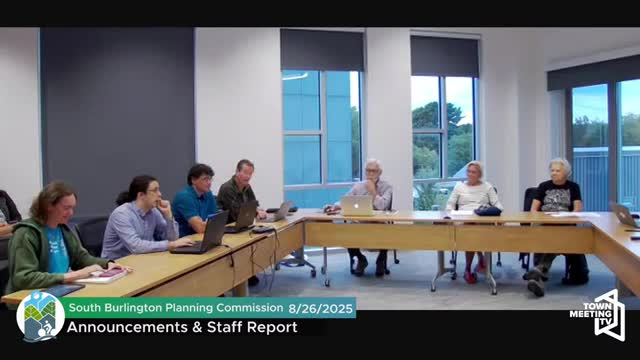
Summary
Planning commissioners reviewed staff recommendations after last fall’s LDR amendments that raised total lot coverage for small residential building types to 50%, debated stormwater triggers and whether extra coverage should be tied to additional housing, and agreed to monitor outcomes before changing the rules.
At a Planning Commission meeting, commissioners and staff discussed whether the recent Land Development Regulation (LDR) changes that raised maximum total lot coverage for single‑family and small residential building types to 50% should be adjusted for larger lots. The commission reviewed staff analysis and public comment about impervious surface, stormwater mitigation and housing trade‑offs after the November 2024 LDR amendments increased total lot coverage limits for 1–4 unit building types. Staff noted the city’s stormwater rules already require mitigation once impervious disturbance is large, saying, “We have city stormwater regulations that, if a half an acre of impervious is installed or in addition, I think it’s over 5,000 square feet is added to existing stormwater, then … stormwater is triggered and you have to do all sorts of mitigation,” which staff said tends to limit large private projects because mitigation is costly. Commission discussion split on whether the higher 50% standard will lead to non‑housing uses — pools, tennis or pickleball courts and other amenities — on intermediate‑sized lots. Commissioner John (Planning commissioner) argued against immediate changes: “I don’t see a reason to to put in new regulations now. I think we have what we have is good, and there’s some safeguards in place. So I think we leave it as is.” Other commissioners and public commenters urged caution. Commissioner Michael (Planning commissioner) said the policy intent matters: “The whole point is not to not to, install more, impervious service than we absolutely have to.” A member of the public who reviewed parcel data suggested alternatives to regulatory limits, proposing a “progressive fee structure” or a scoring approach that would treat certain recreational uses as weighted more heavily when calculating a lot’s effective impervious allocation. Staff and several commissioners flagged implementation tradeoffs: carving thresholds by lot size could encourage subdivision to evade caps, and tying extra coverage to additional housing could complicate the goal of encouraging infill. Staff also noted that the multiple‑principal‑structure allowance is capped at two acres and that many larger properties do not approach previous maxima. Outcome: commissioners did not adopt any ordinance changes. The commission’s direction was to monitor development patterns under the new LDRs, gather more data about whether homeowners are using the extra lot coverage for non‑housing amenities, and revisit the issue if evidence of widespread non‑housing impervious buildup appears. Next steps: staff will continue tracking permit applications and impervious coverage trends and will report back if applications indicate rising non‑housing impervious development that the commission wants to address.