
Columbia council backs Lancaster City’s PENNVEST loan application, presses for construction protections for Manor Street
Get AI-powered insights, summaries, and transcripts
Subscribe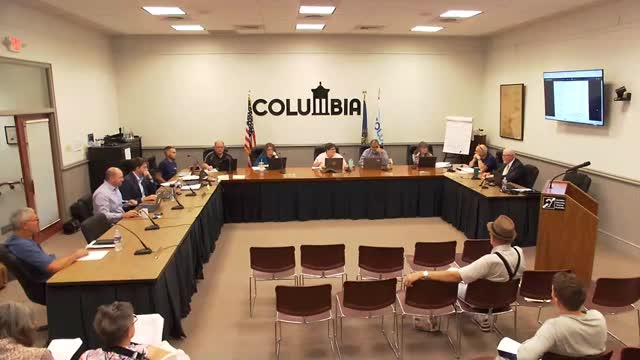
Summary
Council voted to provide a letter of support for Lancaster City’s PENNVEST loan application for a water‑main project, while pressing for firm commitments on detours, restoration, timing around parades and fire department access, and street restoration to curb‑to‑curb.
Columbia Borough Council voted to authorize staff to send a letter of support to Lancaster City for a PENNVEST loan application that would fund a new water main that crosses Columbia, but council members and residents demanded firm, written construction protections before work begins.
Council’s vote on Sept. 9 authorized the letter of support for Lancaster City’s loan application; council members emphasized that the letter supports Lancaster City’s access to financing, not automatic approval of construction plans through Columbia. Multiple members said the borough must negotiate and document firm terms and conditions for street cuts, detours, restoration, timing and traffic controls before permits are issued.
Key concerns voiced in the meeting included: ensuring the fire department can access Manor Street during construction and that parade routes and major events (including a large firemen’s parade next June) are preserved; requiring that restoration be full curb‑to‑curb paving rather than temporary patches; guarantees on trench backfill and compaction testing; limits on overnight parking of construction vehicles; and a clear timetable for staged block‑by‑block work so the borough can coordinate other projects and reduce simultaneous closures.
Engineering and staff context: Borough staff said Lancaster City’s engineers designed the route and that the City retained Arrow Engineering. The borough cannot prevent the project if Lancaster City proceeds, but staff and council noted Columbia can—and should—use the street‑cut permit review process to require restoration standards, sequencing and protections. Staff recommended more front‑end dialogue with Lancaster City and close review of each block’s street‑cut permit, including subsurface utility investigations and compaction testing.
Council and resident remarks: Several council members and residents said Columbia should use its leverage to secure curb‑to‑curb restoration, timetabled sections to avoid large events, and assurances that utilities coordinate pre‑construction utility location to minimize surprise strikes. One resident urged demanding curb‑to‑curb restoration rather than temporary patches; another said the project will cause substantial inconvenience if it overlaps other projects in town.
Outcome and next steps: Council approved authorizing a letter of support while directing staff to press Lancaster City for detailed construction plans and negotiated terms addressing restoration, traffic management, public safety response and timing. Staff said permit review and specific construction conditions will be the principal tools available to the borough once Lancaster City submits street‑cut permits.