
OCPS high school office cites AP, CTE gains and 3DE expansion while warning of $25 million enrollment shortfall
Get AI-powered insights, summaries, and transcripts
Subscribe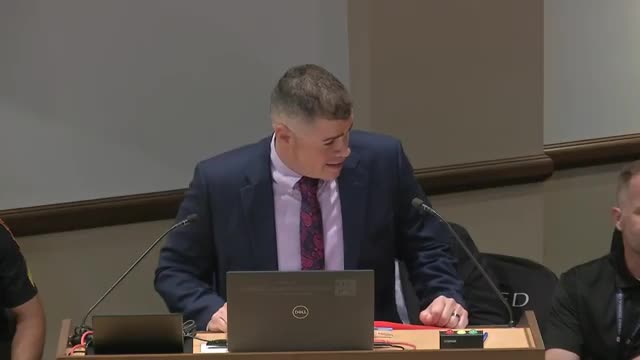
Summary
At the Aug. 26 Orange County School Board meeting, high school officials reported improved AP and CTE outcomes and expansion of the 3DE program, and deputies warned a recent enrollment drop could reduce funding by about $25 million.
At the Orange County School Board meeting on Aug. 26, Executive Leader for High Schools Jose Martinez reported gains across Advanced Placement and career-technical programs and announced expansion of the 3DE project-based business curriculum to three more high schools, while Deputy Superintendent Dr. Armbruster said district headcount declines could cut about $25 million in funding.
The high school report highlighted why the programs matter: improved student outcomes, broader postsecondary opportunities and increased enrollment at some campuses. Martinez said the district’s overall AP exam pass rate for 2025 was 63 percent — “the highest district pass rate we have seen in nine years” — and that the district administered 39,871 AP exams this year. He added that pre‑calculus AP participation rose 24 percent and its pass rate was 77 percent.
Martinez described program expansion and partnerships: OCPS launched a dual‑enrollment partnership with Barry University for juniors and seniors at all 23 traditional high schools, and the district is placing Orange Technical College (OTC) programs directly on high school campuses to increase access. He also announced that the 3DE business program, which partners students with companies for real‑world projects, will expand to Edgewater, Horizon and Lake Buena Vista High Schools for the 2025–26 school year “at no cost to the district.” Student speakers credited 3DE with helping them launch businesses and build professional skills; student Alana Wilson said the program taught her “how to take an idea and bring it to life,” and Colby Salvatore said 3DE showed him “that my voice matters.”
Deputy Superintendent Dr. Armbruster shifted the focus to funding risks tied to enrollment. He said the district had planned for an expected decline of 3,000 full‑time equivalent students (FTE) but now faces an additional estimated drop of 3,600 in headcount, which “could lead to an estimated $25,000,000 reduction in funding.” Armbruster said preliminary figures suggest roughly 3,000 of the additional decline were immigrant students, and he cautioned the board that these figures were based on headcount rather than final weighted FTE tallies. He said district staff are working with schools now to review ES units and weighted FTE so that no school is “cut more than necessary.”
Board members praised the results and asked for continued focus on expanding student pathways. Martinez also summarized increases in college and career acceleration: 5,640 students received AP Scholar awards (an increase of 799 students, or 16.5 percent), AP Capstone recognitions rose to 441 students (up 77 percent), and the district’s acceleration rate (students earning college credit or industry certification while in high school) rose from 65 percent in 2022–23 to 67 percent in 2023–24; results for 2024–25 were not final at the meeting.
Discussion only — no formal vote followed the presentation — and board members directed staff to continue outreach and to monitor school‑level FTE and budget impacts as state funding tallies are finalized. Staff said they would provide more refined weighted‑FTE and funding projections after additional data cleaning and the official October survey results.
The high school office presentation and the deputy superintendent’s enrollment update together framed a near‑term fiscal risk for the district even as officials touted measurable academic gains and expanded career and technical opportunities.