
Teachers and community members urge higher pay; student raises concerns about school lunches
Get AI-powered insights, summaries, and transcripts
Subscribe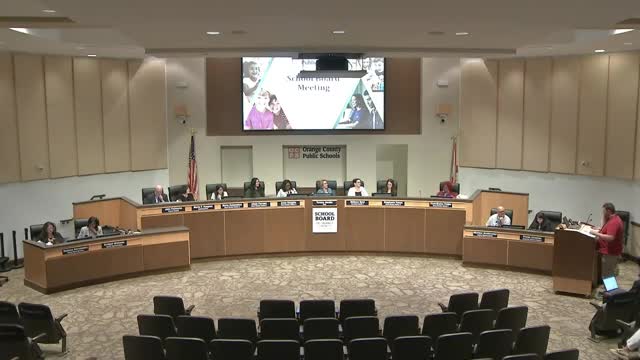
Summary
Teachers and union representatives urged the board to prioritize teacher pay in the budget while a Boone High School student told the board some school lunches lack adequate nutrition or portion size for athletes.
During the public‑comment portion of the Sept. 9 meeting, classroom teachers, union representatives and a student urged the board to prioritize teacher pay and to address school lunch quality and portion sizes.
Jason Souza, a teacher at Timber Creek High School, spoke on behalf of the Classroom Teachers Association (CTA). He said teachers arrived for the school year expecting the district to present a concrete salary proposal and that bargaining sessions had left educators frustrated. “We are the union,” Souza said. “I am a teacher. I’m a CTA member. We are the people out here fighting for our livelihood.” Souza said blaming unions for delays in statewide implementation of raises was unfair and urged the board to use the budget to demonstrate the district values teachers.
Stefana Farrell, a longtime public-school advocate, told the board the state has underfunded school districts and criticized the practice of using the base student allocation to absorb previously categorical funding. “We can’t just throw our hands up in the air and say we can’t do better,” she said, urging the board to pursue stronger local solutions for teacher compensation.
Clinton McCracken, another commenter, framed budgets as policy and urged the board to “invest in educators” before other priorities. “Pay shouldn’t be treated as what’s left over. It should be the starting point,” McCracken said.
Separately, Boone High School junior Anna O’Brien spoke about school lunches and portion sizes. “Sometimes I go to the cafeteria and see what’s in line and it looks like strings of plastic over synthetic chicken,” O’Brien said. She described classmates — including athletes — who sometimes need extra portions to meet caloric needs and asked the board to consider adjustments so students receive nutritionally adequate meals.
Board members acknowledged the comments and pointed to the budget’s incremental teacher salary allocation of about $7.5 million. Members also asked nutrition staff to follow up on student feedback; Superintendent Vasquez said the district values student input and that food-service staff collect taste and preference data from students.
The public comments came amid the board’s broader discussion of budget constraints, state funding shifts and the district’s ongoing efforts to balance competing priorities.