
City and county officials negotiate FY2026 EMS cost split as ambulance payments loom
Get AI-powered insights, summaries, and transcripts
Subscribe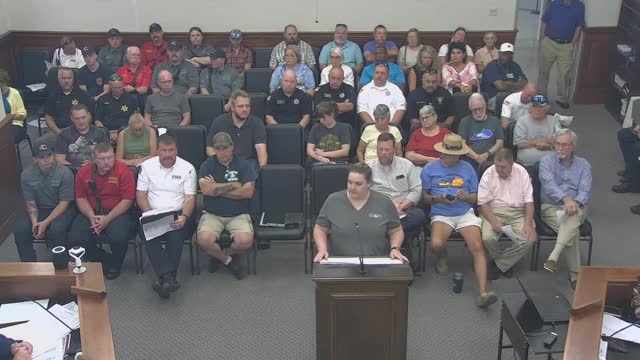
Summary
At a joint city–county EMS committee meeting, officials discussed proposed cost‑sharing for fiscal 2026 operations and capital, outstanding payments on ambulances due in February 2026, and whether the city should absorb remaining capital costs to relieve the county’s near‑term burden.
At a joint city–county EMS committee meeting, city and county officials discussed a proposed cost split for fiscal year 2026 that would make the county responsible for roughly 39 percent of the county’s portion of EMS operating costs — about $968,370 — while the city would cover roughly $491,665 of capital for the same fiscal year. The committee also reviewed outstanding payments and timing for three ambulances expected in February 2026 and asked staff to present options for how to allocate chassis and module payments across fiscal years.
The proposal matters because capital purchases and delayed vendor deliveries have left uneven billing and sizable near‑term obligations that affect both budgets. Committee members said more detailed quarterly breakdowns and clearer documentation of split purchases would help both governing bodies reconcile invoices and avoid surprises.
City staff presented line‑item invoices showing purchases that had been billed to the EMS and fire budgets, including appliance and station maintenance charges. Committee members asked staff to flag split purchases on future quarterly reports — for example, when a refrigerator or station flooring is shared between fire and EMS — so each department’s share is explicit in the quarterly packet. Staff also said they would attach a reference list explaining how specific line items are charged.
Chief Whiteley told the committee that a primary driver of higher EMS costs is expanded staffing: the department’s budgeted and filled positions have increased compared with earlier years, and this raises salary, training, uniform and safety‑equipment expenses. He described the current apparatus and procurement status: a prior contract with Wharton for ambulances had been delayed, the city has three ambulances on order from Frasier of Houston with expected delivery in February 2026, and the city and county previously split down payments on chassis. According to the meeting record, the county paid roughly $100,000 last fall toward those chassis; the record does not provide a precise final balance for the module payments and transcriptions of that figure were unclear.
Officials discussed an option in which the city would finalize payment for the three ambulances so the county would not have an additional capital charge for those units; the city said it could consider that but would need to confirm financing, including whether to fold the amount into an upcoming bond offering. The county asked staff to draft a set of options for both operating and capital treatment, including one that would leave the three ambulances’ final capital payment on the city.
Committee members also noted the start of a 7‑ to 9‑year Stryker equipment lease covering onboard ambulance equipment; staff said they were withholding the county invoice for fiscal‑year‑2025 fourth quarter until ownership and billing questions were clarified. No formal funding decision was recorded at the meeting; members asked that the committee’s recommended option be returned to each governing body so the city commission and the fiscal court can vote separately.
Next steps include: staff producing a written options paper for the fiscal court and city commission that (1) itemizes quarterly operating versus capital billing; (2) shows the city and county share under each option; and (3) clarifies outstanding module balances and payment timing for the ambulances due in February 2026. The committee scheduled follow‑up work and recommended circulating the detailed packet before each governing body votes so neither side is surprised by large capital items.
Details not specified in the meeting record: the transcript includes a reference to an apparent module balance written as “$7.80” but the value as read in the audio/text was unclear; staff committed to provide an exact outstanding amount in writing to the court and commission.