
Council approves nullifying redevelopment deal as owner plans to demolish historic 'Bow Tie' building
Get AI-powered insights, summaries, and transcripts
Subscribe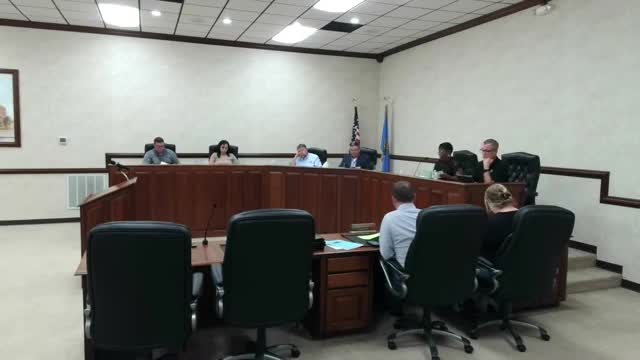
Summary
The council approved an agreement with BMT Group LLC to nullify a prior redevelopment contract for the downtown ‘Bow Tie’ building after repeated failure to redevelop; the developer will have 150 days to act, or the city may proceed with condemnation/demolition and abatement liens, councilors said.
The Atoka City Council voted to accept an agreement to nullify a redevelopment agreement with BMT Group LLC for the downtown structure commonly called the Bow Tie building, after the developer informed the city it plans to tear down the property rather than complete previously promised redevelopment.
The council decision follows a lengthy staff briefing on the building’s condition and the redevelopment history. The city attorney explained that the property had been sold under a redevelopment contract and that the building had been in code-enforcement and condemnation proceedings when the redevelopment arrangement was negotiated. “They have not been able to do that,” the city attorney said of BMT Group’s redevelopment efforts, adding that the developer had told the city it would demolish the building.
Under the nullification agreement the developer will have 150 days to perform agreed tasks; staff said if that deadline is missed the city could condemn the structure and pursue demolition at the property owner’s expense via abatement liens. The council discussed demolition complexity and public-safety risks linked to the site: the Bow Tie occupies a row of attached downtown buildings with 0 lot-line conditions and a shared common wall, meaning demolition must be carefully staged to avoid damage to adjacent structures. Councilors asked how the removal would affect a nearby stage area and the sidewalk; staff said railings or other mitigation would likely be required to protect pedestrians after demolition.
Officials described the building as historically valuable but deteriorated: large roof sections have failed, brick and mortar have cracked and crumbled, and roof joists and rafters have been compromised. The city attorney estimated the original redevelopment deal was executed in 2023 and said the owner previously ordered trusses that never arrived and that recent code-enforcement hearings had continued because the owner indicated redevelopment would proceed. “It’s unsafe right now,” a councilor said during the discussion.
Council members explored alternatives, including whether a neighboring owner might take responsibility for the structure, but staff said no formal alternative plan was ready and that remediation costs (the attorney suggested roof stabilization alone would be costly) made city takeover impractical. The council therefore approved the nullification agreement to clear the legal pathway for demolition by the property owner or, failing that, condemnation and city-led abatement with liens.
The action passed on a roll call vote with all members present voting yes. The city attorney and staff said they would follow up with the property owner on mitigation details and that additional safety measures would be required along the sidewalk and adjacent parcels if demolition proceeds.