
Council allows Mountview Pentecostal Church site plan to proceed; pavement requirement and fire‑safety compaction remain
Get AI-powered insights, summaries, and transcripts
Subscribe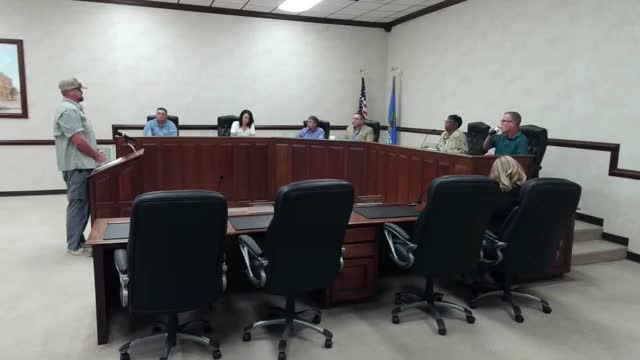
Summary
Council voted to allow the Mountview Pentecostal Church to move its previously approved building plans to a new, privately donated site, while staff and council reiterated that pavement/compaction requirements exist for commercial buildings for fire and life safety and that permits and inspections remain required.
The Atoka City Council voted to allow Mountview Pentecostal Church to proceed with its previously submitted building plans at a different site donated by a private landowner, but staff emphasized the project must still comply with permitting, electrical inspections and compaction requirements. Council discussion focused on section 12.232 (paved services required in commercial areas) and the public-safety rationale for hard-packed or paved surfaces to ensure fire and emergency access.
Justin Hainer, representing Mountview Pentecostal Church, told the council a landowner offered property east of the railroad and that the church seeks to use the same building plans at the new location. Staff and councilors clarified that the parcel’s zoning is appropriate but that the pavement requirement for commercial properties exists primarily to allow emergency vehicles to access the site during wet conditions. Johnny and plan-review staff were referenced as having reviewed plans; one staffer indicated all plans submitted to date had been approved by the plan reviewer, JC, but no building permit had yet been issued for the new site.
Council members and staff advised the church to submit the plans to code enforcement and planning staff for review at the new location and noted that the ability to use gravel or a compacted surface may be handled only on a case‑by‑case basis or via a variance process. The code standard’s intent, staff said, is to ensure surfaces are compacted sufficiently to prevent stuck heavy apparatus during rain events. The council then voted to permit the applicant to proceed with the planned design and directed staff to continue permitting, plan review and inspections; the council did not waive code requirements and said a variance would still be required where code mandates a hard, impervious surface.
No specific variance was granted at the meeting, and staff said any final decision about pavement or surface type would depend on plan review, compaction testing, and, if needed, a formal variance process.