
Council gives Palm Harbor staff time to try to fix losses; asks staff to prepare outsourcing RFP for operations
Get AI-powered insights, summaries, and transcripts
Subscribe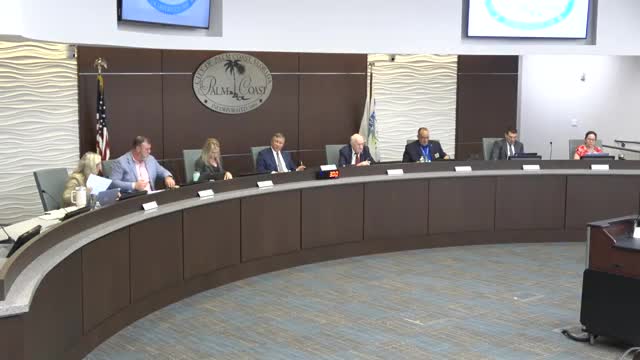
Summary
After months of deficit reporting, the council on Aug. 26 directed staff to continue operating Palm Harbor Golf Club, asked staff to return with a progress report by March, and requested an RFP to be prepared for outsourcing operations (not sale) so council has comparisons if staff cannot reach cost recovery.
Palm Coast's City Council discussed options for Palm Harbor Golf Club on Aug. 26 and instructed staff to pursue a two‑track approach: give the newly restructured city operation a full performance period (returning to council at the end of the second quarter, roughly March) and, in parallel, prepare a draft request for proposals (RFP) so the council will have an outsourcing alternative to consider if the city cannot achieve cost recovery. Staff and council emphasized they did not intend to sell the property at this time.Why it matters: The golf course has been running at a deficit in recent years; residents and council members said the course is a community amenity tied to property values and quality of life, while some council members urged stronger fiscal discipline and consideration of private management if public operation cannot be made sustainable. Key figures discussed included a year‑to‑date operating deficit staff described as roughly $100,000 and a previously cited appraisal and donation details for portions of the property. Body: Parks and recreation Director James Hurst and his team presented internal allocations for the golf course including IT, fleet replacement and facilities maintenance. He said items allocated to the course — information technology, fleet replacement ($295,730), fleet maintenance ($93,016) and facility maintenance ($63,249) — combine with insurance and other costs to create an operating picture that currently shows a deficit. Public commenters and several council members urged patience with new management changes and advocated different remedies. Some council members, noting a history of operating losses, asked staff for an immediate and clear accounting of actual maintenance hours and direct costs the public works and facilities teams spend on the golf course. "If we can get actual hard costs for that, what are spending? That could eliminate our deficit right there," Vice Mayor Pondieri said when urging a workplan to pinpoint chargebacks and actual labor. Councilmember Miller and others said leasing golf carts might make immediate financial sense; staff presented buy vs. lease options (40-, 48-, 52-month comparisons) and flagged an unknown risk: turn‑in damage charges on leased fleets. The city’s current lease with Looper's restaurant and clubhouse operator has two years remaining plus options; staff said Looper's is not currently interested in renegotiating. Outcome and directions: After extended discussion and public comment, council reached consensus on the following multi-step plan: (1) let city staff operate the golf course and give the new management time to implement rate, hour and program changes; (2) have staff return with a progress report at the end of the second quarter (March) showing results and whether the course is trending to cost recovery; and (3) prepare an RFP for outsourcing operations (management-only RFP) to be available so council can weigh private management against the city-run option. The council emphasized that an RFP would be for operations/management, not an immediate sale, and that any sale would require council direction and protections to preserve a public golf course if council chose that path later. Ending: Staff will bring a March report on operational performance, rates and revenue changes; staff will also prepare an RFP for outsourcing operations so council will have competitive proposals and financial comparisons if the city-run option fails to reach agreed targets.