
HELP Initiative summarizes violent‑crime reduction survey in Seaford neighborhoods; residents cite drugs, guns and need for youth programs
Get AI-powered insights, summaries, and transcripts
Subscribe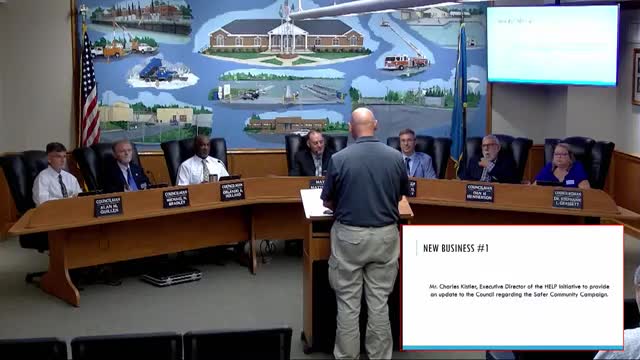
Summary
The HELP Initiative and Seaford police presented findings from a Criminal Justice Council‑funded violent‑crime reduction project focused on geographically concentrated apartment complexes and manufactured‑home parks; residents prioritized police visibility, abandoned‑home remediation, improved lighting and youth programs.
The HELP Initiative briefed Seaford Mayor and Council Tuesday on a Criminal Justice Council‑funded violent‑crime reduction effort that surveyed residents of targeted neighborhoods and delivered local findings and recommendations to city leaders.
The initiative surveyed residents in concentrated focus areas — three apartment complexes and two Seaford neighborhoods — to identify safety concerns and service gaps. The group recommended bolstering police visibility and communication, cleaning up abandoned properties, improving lighting, and expanding youth programming and outreach.
Why it matters: The surveys are intended to guide tailored, place‑based interventions and to connect residents’ concerns with city and nonprofit programming. Presenters urged council to use the intelligence for prevention work and to coordinate existing community resources such as the Citizens Police Academy, Police Accountability Board and CERT teams.
Project details and findings The initiative, led by Charles Kistler, executive director of the HELP Initiative, said the project was funded by the Criminal Justice Council with Chief Craft identified as the original “playbook” source for the approach. The period of performance ran January through September (year of the grant period not specified in the transcript).
Targeted properties included Chandler Heights and Meadow Bridge (in one area) and Little Creek and Hollybrook (in Seaford), with outreach involving property managers. Two neighborhood surveys had roughly the same level of participation: about 23 residents at Chandler Heights and about 22 at Meadow Bridge.
Survey takeaways included: - Primary concerns: drugs, gangs and guns were the most frequently cited safety issues. - Reporting and trust: many residents said they did not always feel comfortable reporting crime or that issues would be addressed; respondents asked for better communication and more visible, regular engagement by police. - Environment and opportunities: residents sought youth programming, after‑school activities, mentorships and safe spaces; abandoned housing and lighting were named as local environmental drivers of fear. - Information channels: many residents rely on Facebook and local news for crime information; presenters recommended improving notice of community meetings and events.
Presenters and council reaction Melory Vinette, HELP program manager, and Terrell (Tyrell) Barn, a GIS/crime analyst, summarized the survey methodology and key themes and urged the council to coordinate outreach and prevention across city programs. Kistler and Chief Craft supported using the findings to develop neighborhood engagement strategies.
No formal council action was recorded; presenters asked the council to incorporate the findings into policing and community engagement plans and to support follow‑up outreach. The transcript records appreciation from council members for the report and encouragement for coordination between HELP, Seaford Police and city departments.