Get Full Government Meeting Transcripts, Videos, & Alerts Forever!
Get email alerts on the Recreation Facility Management topic
No spam. Unsubscribe anytime.
Palm Coast council asks for more financial detail after USTA pitch to manage Southern Recreation Center
Summary
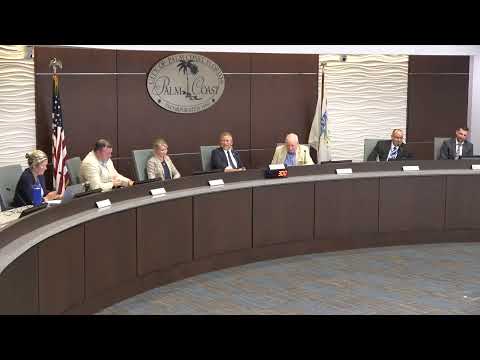
The Palm Coast City Council heard a USTA assessment and management-services proposal for the Southern Recreation Center, but council members did not authorize a contract and instead directed staff to return with more detailed financials, maintenance terms and protections for local programs and pros.
The Palm Coast City Council heard a proposal from the United States Tennis Association to operate the Southern Recreation Center but held off on any management decision, asking staff and the USTA to provide more detailed financial analysis and firmer contract language. The council also asked for clearer guarantees about court maintenance, protections for local instructors and a fuller projection of net fiscal impact.
The USTA presenters described an assessment they completed and outlined a proposed management contract covering Jan. 2026 through Dec. 2031, with a potential three‑year extension. USTA said it would supply a full-time director of rackets, up to six front‑desk attendants, at least five additional instructors, three to four dedicated maintenance staff for clay courts, and a full‑time tournament and events coordinator. The group also proposed maintaining the city’s existing pricing structure for pass holders and granting a 5% additional discount on services such as stringing and special events for annual pass holders.
Why it matters: council members said the center already draws heavy local use and substantial pickleball revenue; handing management and net revenues to an outside operator without precise, comparable financials and clearer maintenance and termination terms could worsen the city’s operating shortfall.
At a staff presentation, Parks and Recreation Director James Hurst described current operations and usage: the Southern Recreation Center, opened in 2008 and expanded in 2024, hosted about 482 activities and 156 room rentals in the year-to-date period presented; it recorded 61,411 check‑ins and 1,292 total pass holders (919 pickleball, 308 tennis, 65 combo). Hurst said year‑to‑date revenue for the facility was $418,880.69 and expenditures were $625,069.21, leaving a year‑to‑date gap of roughly $206,188.
USTA representatives (Laura, George Henry) presented programming ideas and described potential expense savings on the operating side, saying their model could reduce certain operational costs (they cited an internal expenditure-side savings estimate) and would provide marketing, IT and point‑of‑sale systems. George Henry said USTA would hire staff as employees, require background checks and provide a scope of work covering programs, events, instruction and services.
Council members and the city manager pressed USTA and staff on the net fiscal picture. “If we lose all of our revenues and we save a couple $100 in expenditures, net, we’re losing money here,” Council member Miller said during the discussion, noting the USTA estimate of $400,000 in expense savings did not account for the revenue USTA’s contract would take under the sample term. Miller asked for a clear, comparable net projection rather than an expenditure-only savings figure.
Vice Mayor Panieri and others said more detail was required on which maintenance costs the city would retain — particularly clay‑court resurfacing — and on exact contract termination and default clauses. Panieri requested that court maintenance frequency and costs be specified in the scope of work and expressed concern about contract language that would require “complete failure to provide all services for a period of more than 45 days” before termination, a standard she said felt too lenient for the city. Hurst said the proposed 2026 budget contains $25,000 for clay court repair and maintenance but that quarterly or monthly upkeep had been done variably.
Public commenters included frequent facility users and organized‑play leaders. Michael Flanagan, who said he plays tennis and pickleball nationally, urged the council to consider the economic benefits of tournaments and recommended a multi‑year business plan for staging events. Dan Gibson, representing a local pickleball league, warned against sidelining local organized play: “We kicked ***,” he said of recent tournament results and urged not to “put my nets up to play pickleball because something has happened to change the chemistry that we have developed together.” Other regular users — including Terrell Ann Bernard and members of Friends of Tennis — urged stronger programming, better reliability in lessons, and more tournaments to bring hotel room nights and visitor spending.
The council did not vote on a management agreement. Instead members asked staff to: obtain a full, line‑by‑line pro forma showing the current net operating position and modeled net position under a USTA contract (including which revenues would transfer and which capital/maintenance costs would remain city obligations); obtain audited or otherwise comparable P&Ls from at least two municipalities where USTA or similar operators manage facilities; negotiate firmer maintenance scope and termination language with USTA; and return with clarifying language on how local instructors, existing tournaments and community partners (for example Friends of Tennis, Redefine Food Company) would be treated under a management agreement. Council also asked staff to negotiate parking solutions with FPL (the council previously approved a framework for temporary parking under power lines) and to ask the USTA to address pickleball capital needs specifically if a contract is contemplated.
What’s next: staff will continue discussions with USTA and gather the requested financial comparables and detailed maintenance costs for council review. The Humane Society contract and other related items remain on upcoming agendas; council members said they want to preserve local programming while ensuring the fiscal impact is fully understood.
Sources: City presentation and spreadsheets presented by James Hurst; USTA assessment presentation by Laura and George Henry; council discussion and on‑the‑record public comments during the Sept. 9 Palm Coast City Council workshop.