
Raymore city manager presents conservative FY2026 budget, projects $4.7 million ending balance
Get AI-powered insights, summaries, and transcripts
Subscribe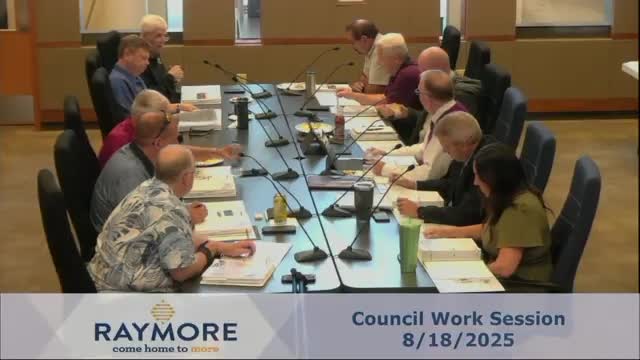
Summary
City Manager Fearborn presented a proposed FY2025–26 operating and capital budget that introduces a new Public Safety Sales Tax Fund, projects modest revenue growth, and leaves the city with an unrestricted available fund balance of about $2.18 million for one-time uses.
City Manager Fearborn on Monday presented the Raymore City Council with a proposed operating and capital budget for fiscal year 2025–26 that he described as “stable but slightly slowing” and projected an ending general-fund balance of $4,711,072 for FY26 with $2,177,703 available for one-time expenditures.
Fearborn said the proposed budget is based on a “modified zero‑based, target‑based budgeting approach” and noted several downside risks to revenue, including uncertainty around Senate Bill 3 and developer caution. “We do believe that fiscal year 2026 is gonna be marked by continuing stable but slightly slowing growth,” he said.
The nut graf — why this matters: the budget sets spending and service levels for Raymore and establishes a new separate fund to track revenue from a quarter‑cent public safety sales tax passed in April. Because the proposal holds reserves and keeps revenue growth under 3 percent, it signals conservative fiscal management while preserving capacity for capital projects and one‑time investments.
Key details: the budget presentation shows the city began FY25 with a higher‑than‑anticipated audited fund balance after revenues exceeded and expenses trued up below projections; that adjusted beginning balance raised the projected FY25 ending balance to $5,116,016. For FY26 staff projects general‑fund revenues to rise $402,162 (about 2.84 percent) over the FY25 budget. Major line‑item projections include a $69,824 property‑tax increase, franchise taxes up $192,993 largely from Evergy rate increases, and a 3.93 percent rise in sales taxes ($196,576). Fees and permits reflect an anticipated 148 new single‑family homes for the year.
Fearborn listed several ongoing transfers and budget features: a transportation‑fund transfer of $320,000 to the general fund, a $331,224 transfer from the stormwater sales‑tax fund, and a planned $1,486,315 transfer from enterprise funds to offset general‑fund administrative costs. He proposed several equipment purchases and one‑time expansion items funded out of available balances and the vehicle/equipment replacement program (VERP), including a parks finish mower and street equipment.
Budgeted personnel changes include a combined merit and market adjustment that the city frames as roughly a 4 percent total salary increase (1.5 percent chart adjustment plus a 2.5 percent merit step). Health insurance is budgeted at a 20 percent increase across medical, dental and vision; staff said they are negotiating with brokers to reduce that amount.
On process and next steps, Fearborn asked council members to expect three or four additional work sessions before the final reading and to consider potential uses of the unrestricted fund balance. He also cautioned that the budget is conservative and does not count “unrealized revenues.”
Ending: the presentation concluded with staff offering to provide additional breakdowns at follow‑up work sessions; no formal vote or adoption occurred at Monday’s meeting.