
Mills County court votes 4-1 to begin process for Red River Clean Energy reinvestment zone
Get AI-powered insights, summaries, and transcripts
Subscribe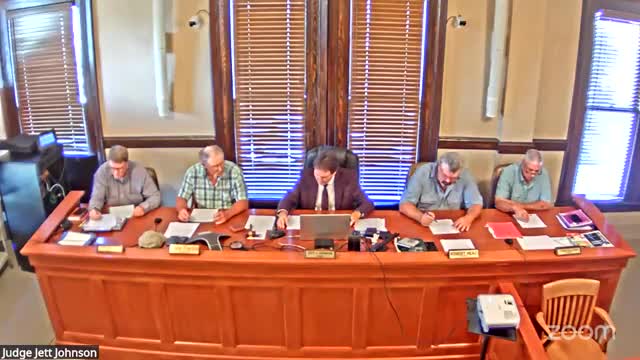
Summary
The Mills County Commissioners Court voted 4-1 on Aug. 25 to begin the procedural steps for creating a reinvestment zone connected to a proposed Red River Clean Energy solar project. The vote starts a process that could lead to future tax-abatement negotiations but does not itself grant any tax breaks or approvals for a project.
On Aug. 25 the Mills County Commissioners Court voted 4-1 to begin the process of creating a reinvestment zone at the request of Red River Clean Energy, initiating steps that could lead to future tax-abatement talks but do not grant any abatements or approvals. Commissioner Williams moved to start the process; Commissioner Hartnell seconded. The court counted four votes in favor and one opposed.
The decision starts a county-level procedural step toward a potential reinvestment zone for a proposed solar and battery project from Red River Clean Energy, but county officials emphasized the vote was only to “begin the process,” not to set tax-abatement amounts or finalize any agreements. Karen Wesson, a retired CPA and Mills County property owner who spoke during public comment, urged the court to reject tax abatements and to require road bonds or road-use agreements if projects proceed.
Wesson said she owns property near one of the proposed sites and that a battery-storage facility could be within “100 yards of my fence and 800 yards of my home.” She also cited state-level proposals she described as restricting renewable-energy tax incentives, naming Texas House Bill No. 5 (1988) and a more recent Senate bill she identified as Senate Bill 819 and saying State Sen. Charles Perry supported the measure in April 2025. “I am here today to ask you to vote against giving any tax incentives, an abatement or a payment in lieu of property taxes to any solar energy companies,” Wesson told the court.
Commissioners debated tradeoffs. Some commissioners said a high tax-abatement percentage—Wesson and others recalled hearing “50%”—would be excessive and raised concerns about lost tax revenue and the county’s ability to collect if a developer later went bankrupt. Others argued a pilot (payment in lieu of taxes) can produce significant revenue in early years compared with leaving a project fully on the tax roll if market values decline. Attorney Jeff Allen (referenced by the court) advised updating the county’s guidelines and criteria for reinvestment zones, noting statute language refers to “new and existing” projects and recommending the county adopt current guidelines whether or not it approves abatements.
Several neighboring counties were cited by speakers as precedents: Brown County and Coleman County were named as counties that had refused future abatements for renewable projects, and County Commissioner Kirk Chastain of Brown County was said to have required a bond for road repair in one local case. Court members discussed road-use agreements and bonds as tools to protect county infrastructure during construction, and Commissioner Pardon said FEMA mitigation work is in progress on some washed-out roads that will also need county attention.
The court voted to open the administrative process for creating a reinvestment zone in order to consider guidelines and criteria and to allow further, formal steps. The court did not set any tax-abatement rates, adopt a reinvestment-zone ordinance, or approve any project. Those would require separate actions and documents at future meetings.
What happens next: initiating the process means county staff and the court will prepare the required notices, draft guidelines and criteria, and schedule additional hearings or workshops before any final reinvestment-zone designation or tax-abatement agreement. The court did not establish a timeline in the meeting.
By the numbers and sources cited in court: Wesson said the developer had advertised roughly 250 jobs; speakers referenced a cited 50% abatement figure as the developer’s initial ask; the court vote to begin the process was 4–1. The county attorney advised updating existing guidelines to reflect statute language about new and existing projects.
Mills County’s next commissioners court meeting is scheduled for Sept. 8, when follow-up items related to this topic could appear.