
Davenport board hears long-range facilities update; preschool access and special-education supports singled out for planning
Get AI-powered insights, summaries, and transcripts
Subscribe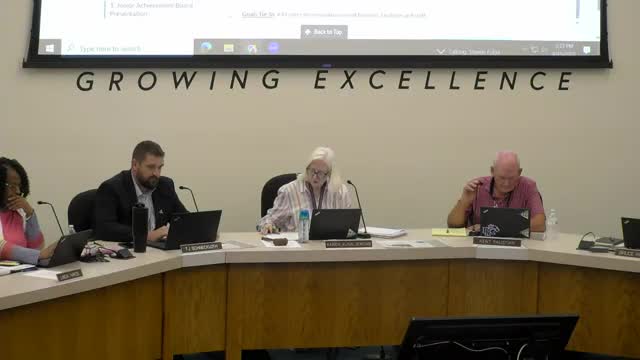
Summary
District staff presented phase 2 of the long-range facilities master plan, reporting declining enrollment but increased special-education demand, four preschool scenarios, a 700-student preschool planning target, and a plan to convene stakeholder meetings this fall with a recommendation expected in November.
The Davenport Community School District received an update on the long-range facilities master plan on the district board's regular meeting, with staff framing early learning (preschool) and the continuum of care for students with disabilities as the immediate priorities for phase 2.
District staff said the district's total enrollment has fallen from previous highs and is now “floating just above 12,000 students,” while the share and number of students needing supports has grown. The presentation identified a shortfall in district preschool capacity and described four configuration scenarios for expanding access, then outlined regionalized options for special-education services.
Why it matters: Facility configuration affects where programs run, how staff are assigned and pooled, and whether preschool and specialized supports are accessible to families. The board was told that choices made now could determine programming and budget needs for the 2026–27 school year and beyond.
John, a staff member on the facilities team, told the board the team validated a prior, detailed facility assessment rather than starting over and recommended repeating that validation about every five years. He said the capacity work shows the district has unused seats overall but that “we're filling that space in the buildings currently” with programmatic needs, including supports.
The presenters reported the district currently serves 504 four-year-olds across Children's Village West, Children's Village Hoover and several school-based sites. They said kindergarten enrollment “floats somewhere in the range of about 900 students,” and estimated that about 300–400 four-year-olds are not being captured in district preschool programs. Based on those figures and other assumptions, the team described a planning target of about 700 four-year-olds as a reasonable coverage goal.
The team sketched four preschool scenarios under consideration: (1) a centralized single children’s village plus school-based preschools (two school-based preschools per region), (2) three regional children’s villages (north, east, west) with additional school-based sites on the western edge, (3) a single centralized children’s village for the whole district, and (4) other combinations to be refined. The presenters said each scenario trades administrative efficiency, geographic access, and building suitability differently.
Staff also presented findings on the “continuum of care” for students with disabilities. They said the district’s proportion of students receiving supports has grown from about 11–12% in 2012 to over 15% in recent years. The facilities team recommended regional solutions: one elementary-level behavioral-disorder (BD) center and one elementary-level intellectual-disability (ID) center per region, plus district-level centers (elementary, middle and high) for autism and a single isolated site or wing for intensive programs called Thrive and RISE. The presentation noted Thrive serves roughly 6–8 students per grade (grades 3–10) and RISE placements are described as temporary interventions (about 10 students per classroom, two classrooms per grade).
Board members pressed for implementation detail. Director Barnes asked how employee capacity and staffing assumptions factor into the capacity calculations; staff deferred a detailed staffing model to a subsequent discussion. Director Beck and others emphasized the need to preserve the least-restrictive environment for students who may attend regional programs and asked that program pathways be designed so students can return to home campuses when appropriate. Superintendent Schneckloff said the district’s stated objective is to be “the first solution provider” for families and to improve access, special-education outcomes and operational efficiency.
The plan calls for four master-plan committee meetings this fall (September–October) with parents and staff representatives reviewing scenarios; staff said the committee will validate a recommendation to present to the board in November. Staff also warned that any physical changes beyond program reconfiguration could require later funding decisions; one board member noted that capital work likely would need to be tied to future bond planning and multi-year budgeting.
No final decisions or votes were taken at the meeting; the presentation was informational and the district will return to the board after committee review. The board and staff emphasized the recommendation will attempt to balance access, staffing feasibility and fiscal constraints.
Looking ahead: staff said decisions that affect the 2026–27 school year will need to be on a timeline that allows budget and operational planning over the next 12–15 months.