
Corte Madera staff to re-adopt reach codes; committee asks staff to re-evaluate remodel thresholds and a 1992–2010 exemption
Get AI-powered insights, summaries, and transcripts
Subscribe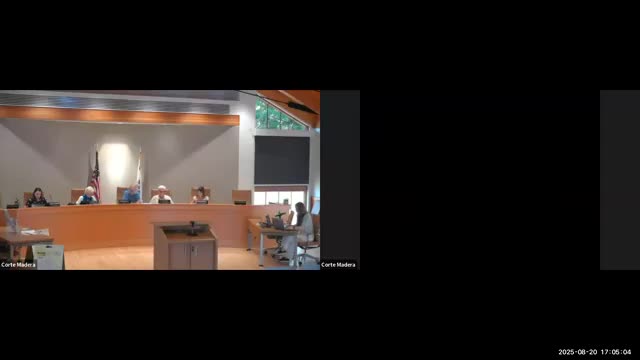
Summary
Committee members supported re-adopting the town's existing energy and EV reach-code provisions where they still exceed the 2025 California Building Standards Code and asked staff to study lowering the single-family remodel threshold from 750 to 500 square feet and to re-examine the 1992–2010 vintage exclusion.
Corte Madera — Town staff recommended re-adopting local “reach codes” that exceed the 2025 California Building Standards Code, and the Climate Action Committee on Aug. 20 urged staff to return with more analysis on lowering the single-family remodel threshold and on whether to re-include a housing vintage that the statewide cost-effectiveness study currently excludes.
“Reach codes are local amendments to the California Building Standards Code, which is also called title 24,” town staff told the committee as they opened a multi-hour discussion of the 2025 code cycle and local options.
Nut graf: Staff explained which of the town’s existing local amendments still exceed the 2025 state code, recommended readopting those provisions, and requested committee feedback on possible additional local measures — notably whether to lower the remodel-trigger threshold from 750 to 500 square feet for single-family projects and whether the 1992–2010 housing vintage (currently excluded from the town’s local target scores because a solar incentive used in the state cost-effectiveness calculation ended early) should be re-examined.
What staff proposed and why - Staff said the 2025 state code (Title 24, energy and CalGreen sections) is substantially stronger than previous cycles: the new code makes heat-pump baselines for many water- and space-heating calculations and raises mandatory EV-ready and bike-parking requirements. - Because the state code is stronger in many areas, the town can keep only those local amendments that remain “more restrictive” than state rules. Staff recommended readopting two local provisions that still exceed the 2025 code: (1) single-family new construction and panel-upgrade triggers requiring an EV-ready Level 2 space rather than only an EV-capable conduit and (2) a multifamily/hotel panel-modification trigger that requires additional EV capacity at the time of a panel change.
Committee concerns and requests - Threshold for remodel-trigger: The town’s single-family remodel energy reach code currently applies to additions/alterations of 750 square feet or more. Staff asked whether the committee recommended lowering the threshold to 500 square feet; several members supported 500 to align with neighboring jurisdictions (San Rafael at 500, Fairfax at 200 and unincorporated Marin planning to move to 500); others warned that lowering the trigger can increase upfront costs for homeowners and could capture many smaller projects with high relative compliance costs. One member cited a Fairfax example where a smaller trigger substantially raised project costs for a homeowner. - 1992–2010 vintage exclusion: The statewide Reach Code cost-effectiveness study relied in part on federal tax credits for rooftop solar to reach a maximum cost‑effective target score for that vintage. The presenter said the unexpected early expiration of those tax credits means the study flagged that vintage as no longer cost-effective; committee members asked staff to seek alternative compliance options (for example, a narrowed set of low-cost, high-impact measures such as lighting or insulation) rather than excluding the entire vintage. - Implementation and fairness: Committee members pressed for clearer rules about how the town calculates affected square footage (staff currently uses the same methodology as the town’s fire-sprinkler trigger) and asked for more flexibility so reasonable minor projects are not swept into larger compliance obligations.
Process and timeline - Staff said they will return with a draft ordinance at the committee’s Sept. 17 meeting and then take the ordinance to town council for a first reading and public hearing on Oct. 7, followed by a second public hearing on Oct. 21; any adopted local amendments would align with the state code cycle and a Jan. 1 effective date. - Staff also said legal review and any required cost-effectiveness updates would be part of the follow-up work; the presenter said she would ask the statewide Reach Code team for updated cost data addressing the solar-credit change.
Outcome recorded - The committee expressed support for re-adopting local provisions that still exceed the 2025 state code and asked staff to return with additional analysis about lowering the single-family remodel threshold (750 to 500 square feet), with detailed cost estimates. Committee members also asked staff to explore options for the 1992–2010 vintage rather than a blanket exclusion.
Why it matters: Reach codes are one of the principal local levers to reduce building-related emissions. Any local change affects permit requirements for homeowners and developers and can change upfront costs for renovations and new construction.
Next steps: Staff will provide a draft ordinance in September, updated cost-effectiveness data where available, and more detailed permit-impact estimates before the committee makes a formal recommendation to council.