
Board advances revised policies on law-enforcement contact and student publications
Get AI-powered insights, summaries, and transcripts
Subscribe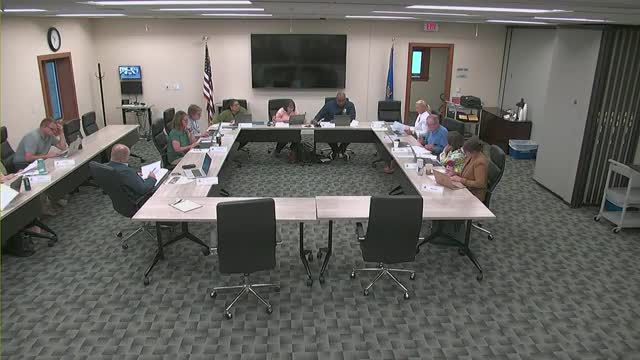
Summary
The board approved second readings and motions to adopt multiple updated board policies, including language on interaction with law enforcement on school grounds and staff monitoring of school-sponsored student publications and approved social-media platforms.
Sheboygan Area School District trustees moved forward Aug. 20 with a package of revised policies that address how the district interacts with outside agencies and how staff will monitor school-sponsored student publications and district-approved social media platforms.
What happened: the board took a consolidated second reading and approval of multiple policy revisions. During discussion a board member asked whether local law enforcement agencies have procedures consistent with district expectations and whether memoranda of understanding (MOUs) are used to align operational practices. Dr. Conrad replied that the district cannot unilaterally change a law-enforcement agency's policies but said the district does use MOUs to establish working practices and that "an MOU may say you're not supposed to intervene unless an administrator tells you to do so. But when you see a child that intervene." He added MOUs are intended to clarify roles during response situations.
On student media and social media monitoring: a board member asked how the district will "monitor district approved social media platform sites" referenced in the revised policy. Rachel, who spoke to the language, said the statute requires staff to monitor comments posted to approved platforms and that monitoring applies to school-sponsored student media and school-controlled platforms. "It would be something, that Dr. Conrad kinda spoke to, something that we're approving, and the student will be working with the teacher that's overseeing the publication to approve it," Rachel said. She explained that staff do not attempt to police off-campus, student-created content that is not a school-sponsored publication.
Why it matters: the revisions clarify the district's expectations for staff oversight of school-controlled online platforms and affirm that the district's ability to regulate student-created, off-campus content is limited. Trustees discussed the operational challenge of ensuring consistent monitoring as platforms and tools change frequently.
Board action: the board voted to approve the bundle of revised policies (policy numbers discussed during the meeting included, among others, 75-44 for use of social media and a suite of other policy numbers identified during second readings). The approval was by voice vote; the transcript records "All in favor, say aye. Aye. Motion carries." No roll-call vote was recorded in the transcript.
Ending: trustees directed staff to continue updating lists of approved platforms and to use MOUs where appropriate to align expectations with outside agencies. The board will receive updates about policy implementation as part of its committee and consent processes.