Board hears state budget changes that create $450,000 shortfall for district
Summary
Administrators told the Sheboygan Area School District board that an unexpected state budget change — a large increase in the open-enrollment tuition amount — produced an approximate $450,000 deficit in the district's preliminary budget despite a 10% boost in special education reimbursement and other offsetting items.
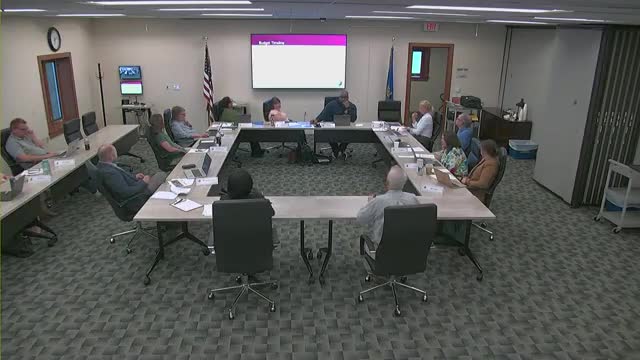
The Sheboygan Area School District Board of Education was told on Aug. 20 that a late change in the state biennial budget produced an unexpected shortfall of about $450,000 in the district's books.
District business staff presented the effect during a pre-session summary and budget briefing to staff and board members. Mark, who led the budget presentation, said the district had planned a preliminary budget assuming $3.25 per-pupil state funding and a 10% increase in special education reimbursement; those two items, plus other assumptions, would have produced a balanced budget. "There was an unexpected item in the budget that really caused a deficit for us," Mark said, adding that "the increase to the tuition amount for public school open enrollment went up a thousand dollars," a change he described as three to four times a normal annual adjustment and the driver of the roughly $450,000 deficit.
Why it matters: the change affects the district's near-term operating plan and funding conversations with the community. Mark and Superintendent Dr. Conrad told staff that, even with the special education increase, the open-enrollment tuition adjustment substantially altered the district's revenue outlook and will shape the budget work the board must complete this fall.
District leaders framed the shortfall within broader funding trends. Mark and Dr. Conrad emphasized that long-term state funding has not kept pace with inflation: "Had revenue been indexed with inflation, we would have $3,380 more dollars per pupil than we have now," Mark said, and multiplying that figure by the district's enrollment would have produced an estimated $32 million more in this year's budget. The presenters did not say the $32 million was an immediate revenue expectation; it was presented to illustrate the gap between current funding and an inflation-indexed benchmark.
Officials also reviewed recent shifts in school financing statewide and locally. Dr. Conrad described voucher and levy trends, saying the district's operating levy has fallen while voucher program payments have grown markedly over the past decade. The presentation noted the district did not go out for an operating referendum but did win a facilities referendum with 65% approval earlier this year; presenters said the referendum result and a Moody's bond-rating upgrade reduced borrowing costs, with the district estimating interest savings over the life of the loan (presented as $16,000,000) tied to that upgrade.
Board action and next steps: the board approved routine budget revisions and transfers of appropriations during the meeting by voice vote; the presentation flagged that staff will continue to review revenues and bring specific budget adjustments back to the finance committee and full board as needed. Mark and Dr. Conrad said the district has contingency plans and will watch bid results and market changes that affect project and operating costs.
Discussion and concerns: board members asked how the state change was inserted into the budget and whether it had been discussed previously at the state level. Mark said the tuition change was not widely discussed before enactment and described it as an item that "snuck in there." Board members also asked about the district's long-term ability to pay competitive wages and maintain services; presenters said a 1% raise across employee groups costs roughly $1 million in the district and that long-term funding shortfalls make wage and service decisions difficult.
The board did not take a new funding action at the meeting; staff were directed to continue budget monitoring and return with recommended adjustments if necessary.
Ending: Board members thanked staff for the budget presentation and for the context connecting state policy choices to local impacts. The district plans to continue the budget review through the fall, with committee and board votes on specific appropriations as warranted.