
Council declines to pass revised electrical rate ordinance 18-76; ordinance dies for lack of motion
Get AI-powered insights, summaries, and transcripts
Subscribe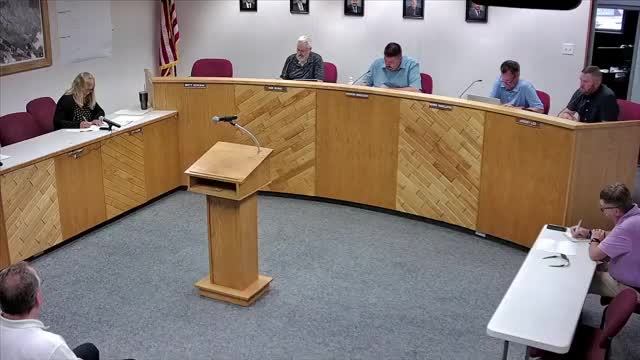
Summary
On Aug. 26 the Sydney City Council did not move to adopt Ordinance 18-76, a proposed change to the city's electrical rate structure, after a third reading and a redesignation vote. Staff presented cost breakdowns and possible operational impacts; no formal rate increase was adopted.
The Sydney City Council on Tuesday, Aug. 26, did not pass Ordinance 18-76, a proposed update to the city's electrical rates, after the third reading and a vote to redesignate the amended ordinance. The council completed the third reading but no motion to adopt followed, and a staff official said, "If there's no motion to pass, then it dies."
City utility staff had presented the ordinance revisions and answered technical questions at the council meeting. Staff described major edits since the prior meeting, including removal of a proposed multi‑year (two‑ or four‑year) rate step and a shift to a one‑ and two‑year increase structure. The staff presentation included a July month cost breakdown showing fixed costs at about 15% of the utility's total expenditures, capital expenses at about 36%, power purchases at about 47%, and contingency at 2%.
Staff explained how wholesale billing components vary by supplier: on the "mean" side about 33% of the wholesale bill is for fixed cost recovery, Western Area Power Administration (WAPA) demand comprised about 52% of that bill, Sandhills Solar carries no demand or fixed‑cost recovery (it is billed only on kilowatt‑hours), and City of Sydney demand represented about 11% of its total bill. Utility staff said that if the council chose no rate increase the utility could be "looking at maybe breaking even or still dipping into our reserves" and estimated the shortfall as "a few 100,000."
Councilmembers debated alternatives including raising the meter base fee rather than the kilowatt‑hour charge; staff said increasing the meter charge to roughly the staff‑estimated target would add about $128,000 in revenue if applied to roughly 3,500 meters. Councilmember remarks raised concerns about low wages in the utility and employee retention costs; one councilmember said he preferred to see targeted wage or retention spending tied to any rate change.
The procedural sequence at the meeting: councilmember Radcliffe moved to redesignate the newly amended ordinance and Councilmember Koontz seconded; the council voted to redesignate. The clerk read the ordinance title for a third time. When the mayor asked for a motion to pass the ordinance, no member made that motion and the ordinance failed for lack of a motion.
Because no ordinance was adopted at the meeting, the council left rate levels unchanged pending any future action. No new effective rates were adopted at the Aug. 26 meeting.