
North Dakota Supreme Court considers whether district court complied with Rule 11 in Chambers guilty plea
Get AI-powered insights, summaries, and transcripts
Subscribe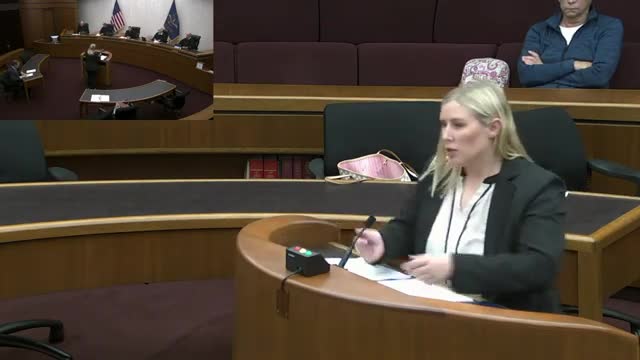
Summary
The North Dakota Supreme Court heard argument over whether the district court provided a sufficient factual basis and proper advisals under Rule 11 before accepting David Chambers’ guilty plea, focusing on intent, a surveillance video that is not in the record, and whether the plea was binding or effectively an Alford/open plea.
Bismarck, N.D. — The North Dakota Supreme Court on Sept. 3 heard arguments over whether the district court failed to comply with Rule 11 of the North Dakota Rules of Criminal Procedure when it accepted David Chambers’ guilty plea, a procedural challenge that asks whether the record shows a sufficient factual basis that Chambers intended to kill the victim.
The issue matters because Rule 11 requires the court to ensure pleas are knowing and voluntary and supported by an adequate factual basis; the appellant says the district court did not make the necessary inquiries and therefore Chambers should be allowed to withdraw his plea.
Jamie Shibley, counsel for the appellant David Chambers, told the court the change-of-plea colloquy was short and did not establish intent to kill. Shibley said the transcript shows Chambers told the court he “didn’t even remember. I was so intoxicated,” and that defense counsel later told the court Chambers had watched surveillance video and “can confirm that the video shows a factual basis as the state alleges.” Shibley argued that the court nonetheless failed to probe whether a jury could infer intent from the video and other evidence and that the district court did not make an explicit finding that the factual basis supported the intent element required for the charged offense.
Aristan Johnson, senior assistant state’s attorney for McKenzie County, defended the conviction and urged the court not to reverse. “This is a case of buyer’s remorse,” Johnson said, arguing the defendant took responsibility for his conduct, agreed the video showed the acts alleged, and that a defendant’s intent may be inferred from circumstantial evidence. Johnson told the court the district judge was reluctant to accept a plea without adequate factual basis and that the transcript, while not a substitute for being present in the courtroom, does not show reversible error.
Counsel debated whether the plea was an open plea under Rule 11(c)(1)(B), a binding plea, or effectively an Alford plea (where a defendant maintains innocence but concedes the state could convict). Shibley said the record does not show the court informed Chambers about the effect of a judge declining to follow any sentencing recommendation, a Rule 11 requirement when the plea fits particular categories. Johnson said there was no agreement on sentence at the plea hearing and no binding sentencing pact in the record.
The parties also discussed drafting errors in the charging papers. Johnson said the county’s charging software used a statute/classification table that had not been updated to reflect recent jurisprudence on the noncognizable doctrine for “attempted knowing murder,” and that the error has since been corrected in the database.
Both sides acknowledged that the surveillance video discussed at the plea hearing is not part of the record before the Supreme Court. Johnson said, “to my knowledge it is not part of the record,” and added that reversing to consider the video would require extraordinary steps to add the exhibit and remand for a new hearing.
Shibley told the court Chambers did not move to withdraw his plea before sentencing and emphasized that the central question is whether Rule 11 was substantially complied with at the change-of-plea hearing. Johnson replied that any failure was invited by defense counsel’s workaround and that the district court had multiple sources it could rely on in finding a factual basis.
The Supreme Court took the case under advisement. The court adjourned until 9:30 a.m. Sept. 4 for further business.