
North Dakota justices weigh sufficiency of evidence in child-neglect conviction
Get AI-powered insights, summaries, and transcripts
Subscribe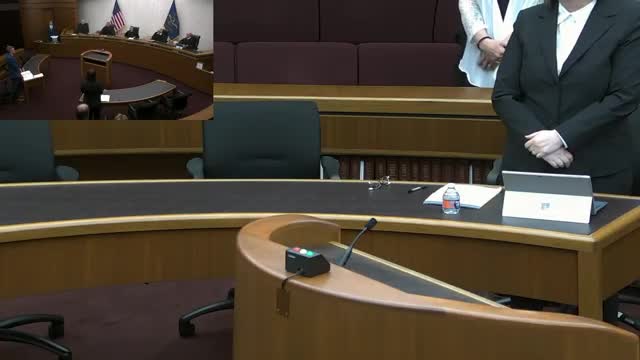
Summary
At oral argument in file no. 20250009, the North Dakota Supreme Court heard competing views on whether evidence presented at trial was sufficient to prove that Michelle Pittsley was an "adult household member" responsible for three minors and that the home's condition amounted to a willful failure to provide necessary care.
The North Dakota Supreme Court heard oral argument Tuesday in State v. Michelle Pittsley (file no. 20250009) on whether the evidence presented at trial was sufficient to support a conviction for child neglect under N.D. Cent. Code § 14-09-22.1. Appellate counsel Kira Krauspar told the court the trial record lacked proof that Pittsley was legally responsible for the three minors described in the state's case. Assistant Burleigh County State's Attorney Dennis Ringgold told the court the record and 60 photographs supplied the jury a reasonable basis to find Pittsley was an adult household member and that the home's condition endangered the children.
Why it matters: the justices must decide how to treat inferences the jury drew from testimony and exhibits — including whether the term "adult household member" in the statute requires proof of a legal custodial relationship beyond mere co-residence. The outcome will guide how lower courts assess sufficiency when similar facts are presented.
At argument, Krauspar, representing Pittsley, urged the court to reverse the district court's denial of a Rule 29 motion for judgment of acquittal. She said the state's proof fell short on element three of the instruction, which required that the defendant be "a parent or an adult household member, guardian, or other custodian" of a minor. "There was no testimony linking these children to my client. There's no testimony that she was in any way legally responsible for these children," Krauspar said, arguing the instruction was being interpreted overbroadly when the state treated any adult who lives with children as automatically legally responsible.
Ringgold disputed that characterization and walked the court through the trial testimony. He told the justices the probation officer, Officer Schmeichel, testified Pittsley told her "3 children ages 12, 14, and 17 lived in the home and had rooms in the basement," and that Pittsley later testified she was "cleaning up the home for her children." Ringgold said those facts, together with roughly 60 photographs the jury viewed, permitted the jury to infer Pittsley was an adult household member and that the home's condition risked the children's physical, mental or emotional health. Ringgold summarized Officer Schmeichel's testimony as saying the home smelled "like a hoarding style house garbage putrid just unclean property," and that "most rooms in the residence including the children's bedrooms were completely cluttered," making access difficult in an emergency.
Krauspar countered that her client's short testimony — she said she was preparing the home so children could live there — did not amount to an admission that the children were currently living in the home or that Pittsley had legal responsibility for them. She emphasized that no children were present at the probation-home visit and that the trial record did not include direct testimony from a social worker, counselor or medical professional describing harm to the specific children. "There was a lot of argument about facts not in evidence," Krauspar said.
The justices asked questions about the trial instruction's language, the jury's role in drawing inferences from photographs and testimony, and whether the standard of review on sufficiency — viewing the evidence in the light most favorable to the verdict — allows reversal when reasonable jurors could draw the disputed inferences. Justice questions focused on whether "adult household member" is a term of art that requires proof of legal responsibility and whether the jury was instructed or argued to apply a community "minimal standard" in judging the home's condition.
Procedural posture and record details cited at argument included: the probation search and officer testimony, defendant testimony that she had children and was preparing the home for them, the presence of 60 photographs entered for the jury's review, and the reference in the charging/instruction record to the third element (adult household member). The underlying home-visit date referenced in argument was June 6, 2024. The district court had denied the Rule 29 motion; Pittsley appealed that denial to the Supreme Court.
The court took the case under advisement; no decision was announced. As is standard, the justices said a written opinion will be issued in due course and that the court would reconvene at 1:30 p.m. The record of the oral argument will guide whether the conviction stands or whether the court will direct reversal for insufficiency of the evidence.
(Reporting note: quotes and assertions are drawn from counsel argument and trial testimony as presented at oral argument. The docket number for the appeal is 20250009, and the statute discussed is N.D. Cent. Code § 14-09-22.1.)