
North Dakota Supreme Court hears appeal over whether lawyer's silence required new trial in Marquis Smith case
Get AI-powered insights, summaries, and transcripts
Subscribe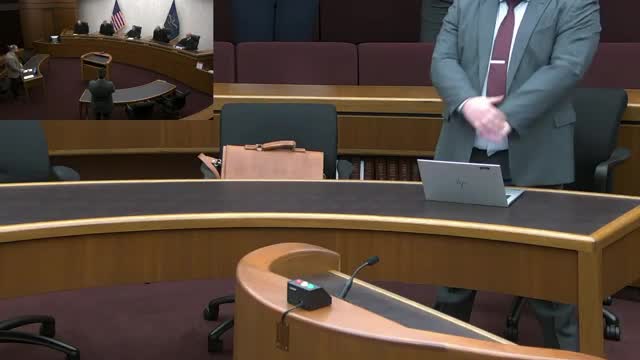
Summary
The North Dakota Supreme Court heard oral argument on the state's appeal of a district court order that granted post-conviction relief to Marquis Smith, who was convicted in a child-sexual-misconduct case.
The North Dakota Supreme Court heard oral argument on the state's appeal of a district court order that granted post-conviction relief to Marquis Smith, who was convicted in a child-sexual-misconduct case. Attorneys for both sides debated whether trial counsel's failure to object to evidence about the defendant's internet searches amounted to ineffective assistance of counsel under Strickland v. Washington and whether the district court applied the correct legal standard.
At oral argument, Attorney Isaac Lees, representing the appellant (the State of North Dakota), told the court, "It is the state's position, that the district court clearly erred" in granting relief and argued the district court applied the wrong legal standard and misread controlling precedent such as Brewer v. State and Wickham v. State. Lees said trial counsel "essentially made a matter of trial strategy" in choosing not to object, and he emphasized that the rules do not require a written pretrial response to a Rule 404(b) notice.
Attorney Kyle Craig, representing the appellee, Marquis Smith, argued the district court properly weighed the evidence at an evidentiary hearing and found that trial counsel's conduct met both prongs of Strickland: deficient performance and resulting prejudice. Craig told the court, "...the district court properly concluded that the Strickland test had been met by mister Smith, that mister Fisher...had been performed ineffectively. And as a result, mister Smith had suffered prejudice with the only recourse being the grant of a new trial for him."
Nut graf: The appeal turns on two legal questions the justices repeatedly pressed the lawyers to clarify—(1) whether the trial lawyer's decision not to object was a constitutionally reasonable strategic choice (Strickland prong one) and (2) whether admission of the challenged evidence made a different outcome reasonably likely (Strickland prong two). The evidence at issue included testimony referencing the defendant's internet searches; counsel and the district court debated whether that material should have been excluded under Rule 403 or treated as prior-bad-act evidence under Rule 404(b).
From the bench, several justices questioned whether the district court had applied a subjective hindsight standard by asking whether a judge sitting at trial would have ruled differently. Attorney Lees warned against treating a post-conviction judge's view of what they would have done as dispositive, saying the district court "used a subjective standard rather than an objective standard." Craig countered that the district court, which heard live testimony at the post-conviction hearing, was entitled to assess witness credibility and reasonably found counsel's explanations wanting.
Both sides also disputed how analogous precedent should be applied. Lees argued Brewer and related cases are factually distinct because prior-appellate decisions often involved charged prior crimes; he stressed that, in this case, Sergeant Betts testified the phone searches contained no child sexual material. Craig emphasized cases in which courts overturned convictions after similarly prejudicial material reached juries and urged the high court to respect the district court's factfinding.
Counsel also discussed remedial options if the court reverses. Craig said a remand would be appropriate so the district court could consider additional claims (for example, alleged unnoticed expert testimony by a forensic interviewer and a detective) if the Supreme Court vacates the post-conviction ruling.
The justices received a procedural update on the record: "This case will be taken under advisement," and the court adjourned the morning session.
Ending: The court did not announce a decision at argument; it took the matter under advisement. The justices will issue a written opinion resolving whether the district court applied the correct Strickland standard and whether the district court's grant of post-conviction relief should be affirmed, reversed, or remanded for further findings.