
N.D. Supreme Court hears appeal over implied‑consent advisory in DUI‑related death case
Get AI-powered insights, summaries, and transcripts
Subscribe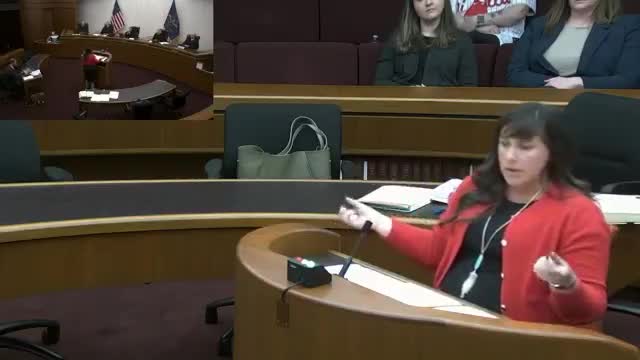
Summary
The North Dakota Supreme Court heard arguments in State v. Travis Dean Bell over whether two implied‑consent statutes (NDCC 39‑20‑01 and 39‑20‑01.1) should be read together and whether a breath‑test advisory given by a trooper was coercive; the court took the case under advisement.
The North Dakota Supreme Court heard oral argument in State of North Dakota v. Travis Dean Bell (No. 20250092) over whether two implied‑consent statutes — NDCC 39‑20‑01 and NDCC 39‑20‑01.1 — must be read together and whether a breath‑test advisory given by Trooper Erickson improperly coerced the defendant into submitting to a chemical test. Chief Justice John Jensen and Justices Daniel Crothers, Lisa Fair McEvers, Jared Tufte and Douglas Barr presided; the court took the case under advisement.
Why it matters: the court’s interpretation could change what law enforcement may say and do at crash scenes where officers initially do not know whether injuries are serious, and it could affect whether a refusal to submit to testing is criminal depending on which statutory path applied.
On behalf of the state, attorney Rachel Eggstead argued the statutes should be read “in concert” and that the operative “fork in the road is when the defendant refuses.” Eggstead told the court the district court erred by treating the sections as separate so that an officer would have to choose a statutory path at the moment of initial contact. She warned that treating the statutes as separate would force officers to decide at the scene whether to treat every stop as a standard DUI investigation or as a criminal‑vehicular‑injury/homicide investigation, which she said is impractical because officers often do not yet know the full facts on arrival. Eggstead also argued the district court’s finding that the defendant made repeated refusals was against the manifest weight of the evidence and pointed to body‑camera video and the intoxilyzer room testimony when contesting the district court’s coercion analysis.
Appellee’s counsel Drew Huschka replied that the central question is whether Trooper Erickson misrepresented the law by telling Travis Bell that refusing a chemical breath test would constitute a crime. Huschka emphasized the distinction between statutory “implied consent” and voluntary consent under the Fourth Amendment, saying the former is not by itself sufficient to sustain a warrantless criminal search. He argued the district court had credible evidence supporting its determination that the advisory and surrounding circumstances—including the officer’s statements, the handcuffing and the request/readings—were coercive and that those factual findings should be upheld on appeal. Huschka noted the defense’s reliance on the court’s prior decision in Devine and recent out‑of‑state decisions distinguishing implied consent from Fourth Amendment voluntariness.
Both sides discussed related case law and practical issues: whether breath tests (which the U.S. Supreme Court in Birchfield has treated differently than blood draws) affect the statutory analysis; whether hospitals will comply with warrants for blood; and whether a later change of mind by a motorist (consenting after an earlier refusal) alters the officers’ obligations. Counsel also debated whether the legislature’s subsequent amendments reflect acquiescence in prior judicial interpretations. The district court’s order (Judge Sandberg) reached extensive factual findings, including that the officer’s testimony about the nature of the investigation was not entirely credible; both parties argued over how that credibility determination should affect appellate review.
The court did not announce a decision at argument. At the close of the session Chief Justice Jensen stated the case would be taken under advisement; no final ruling was issued during the argument session.
The appeal raises two primary legal issues: (1) statutory interpretation — whether NDCC 39‑20‑01 (general implied consent) and NDCC 39‑20‑01.1 (special procedures for suspected criminal vehicular injury or homicide) operate together or separately for purposes of the implied‑consent advisory and refusal criminalization; and (2) Fourth Amendment voluntariness — whether the advisory and the surrounding circumstances rendered the defendant’s purported consent involuntary. How the Supreme Court resolves those questions could affect what officers are required or permitted to tell motorists at crash scenes and what evidence remains admissible in prosecutions.