
North Dakota Supreme Court hears appeal over ICWA 'active efforts' and child-protection findings
Get AI-powered insights, summaries, and transcripts
Subscribe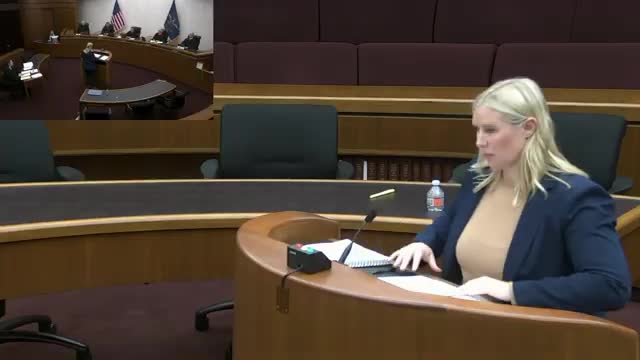
Summary
At a North Dakota Supreme Court oral argument, attorneys for an appellant father and the State disputed whether four children were properly declared "children in need of protection" and whether the Grand Forks Human Service Zone made the "active efforts" required to prevent the breakup of an Indian family under state and federal law.
At a North Dakota Supreme Court oral argument, attorneys for an appellant father and the State disputed whether four children were properly declared "children in need of protection" and whether the Grand Forks Human Service Zone made the "active efforts" required to prevent the breakup of an Indian family under state and federal law.
The dispute arises from a district-court proceeding that removed four minor children from parental care after reports of abuse and possible exposure to illegal drugs. Jamie Shively, counsel for the appellant (the children's father, identified in the record as JL), told the court the parents had requested mental-health, chemical-dependency and parenting services and that the human service zone did not provide those services because it lacked releases of information. "They needed proper education, they needed proper care," Shively said, describing the father's efforts to secure schooling and housing after his release from incarceration.
The State, represented by Madison Gruber, urged the court to affirm the district court's findings. "The record does contain clear and convincing evidence that the children's care falls below the minimum standard of care required and that the children were exposed to controlled substances," Gruber told the justices, citing the statutory standard for children in need of protection and testimony that one child tested positive for methamphetamine on a hair-follicle test.
At issue on appeal are two legal questions: (1) whether the record supports the district court's finding that the children lacked proper parental care or were exposed to controlled substances at the time of removal, and (2) whether the zone satisfied the "active efforts" requirement under the North Dakota Century Code and the Indian Child Welfare Act (ICWA) to prevent an Indian child's removal from family and tribal placements.
The State emphasized placements and post-removal supports: the zone initially placed the children with a paternal aunt (the placement the father had chosen), later moved the children when the aunt reported she could no longer care for them after alleging threats by the father, and secured an ICWA-preferred placement for the boy while the three girls remained together in a foster placement nearby. Gruber described multiple attempts by caseworkers to engage the parents, including arranging supervised visits and traveling to Devil's Lake to bring the parents to court; she said the tribe had been involved and approved placements and that the zone continued to seek ICWA-preferred placements.
Shively contested the sufficiency and thoroughness of the zone's efforts. She told the court there was no testimony showing the zone provided the specific rehabilitative services parents requested, and she questioned whether the zone took continuing steps after the initial placements, noting testimony that a caseworker "did not continue any further efforts once the children were placed in the foster family." Shively also argued the parents did request services but received no concrete case plan and were hindered by lack of transportation, internet and other resources.
The justices questioned both sides about the scope of review on appeal, whether the court should evaluate the father's conduct in isolation or consider the parents jointly, and what evidence supported conclusions about cooperation or noncooperation. Justice Daniel Crothers asked, "So what did your client do? What did he do to fix the problems that created the need for the services? Did he get a job? Did he get a home? Did he get treatment?" Shively acknowledged uncertainty in the record about whether the father obtained employment or stable housing but argued the record also showed the parents repeatedly requested services.
Both sides referenced factual specifics from the district-court record: a child tested positive on a hair-follicle test (the State noted testing and the typical two-week window for detection was discussed at trial), caseworkers' testimony that parental communications were sporadic or sometimes hostile, testimony that one caseworker had been hung up on during safety-plan calls, and testimony from a guardian ad litem that, in a later interview, the children did not express fear of their parents and that at least three children said they wanted to go home.
No decision was announced. The court took the case under advisement and adjourned the session until 1:30 p.m. the same day.
Ending: The result on appeal will turn on the Court's assessment of whether the district court's factual findings were supported by clear and convincing evidence and whether the zone satisfied the statutory definition of "active efforts"; the justices took the case under advisement and did not issue a ruling at the hearing.