Get Full Government Meeting Transcripts, Videos, & Alerts Forever!
Get email alerts on the Special Education Placements topic
No spam. Unsubscribe anytime.
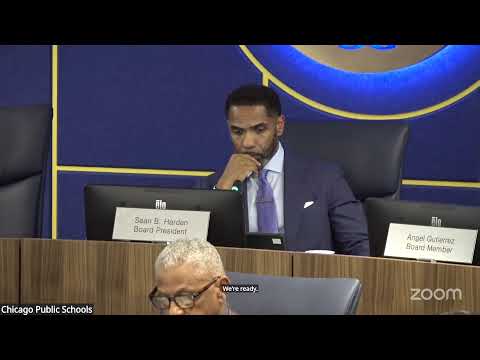
Board asked to authorize payments for special‑education placements; members pressed for oversight details
Summary
Chicago Public Schools asked the board to authorize payments for special‑education services to state‑approved nonpublic facilities after describing the district’s use of therapeutic day and residential placements for students with intensive needs.
Chicago Public Schools recommended a resolution authorizing payments for special‑education services provided at various state‑approved nonpublic facilities for students whose Individualized Education Programs (IEPs) require intensive supports beyond district capacity.
Why it matters: The district places some students with intensive needs in therapeutic day schools or residential facilities when services cannot be provided locally. These placements are costly and are subject to state oversight and contractual arrangements; board members asked detailed questions about compliance and monitoring.
What staff presented: Josh Long, chief of the Office for Students with Disabilities, said the district currently places just over 1,000 students in nonpublic settings and “a very small number, just over 60 students who are placed in residential settings.” Long said most therapeutic day placements are within the Chicagoland area while residential placements tend to be out of state. He described a preference to place first in ISBE‑approved programs and to consider non‑ISBE options only when needed and when referrals are not accepted by approved programs.
Board concerns about oversight and quality: Members pressed for information about how the district ensures compliance and monitors outcomes at those facilities. Long said the district conducts periodic on‑site observations (typically once per year for residential placements) and monitors IEP completion and goal progress, but acknowledged there is not continuous on‑the‑ground staff presence at out‑of‑state residential facilities. “We do on‑site observations, but that's typically once a year at most... we do not have people that are there on a daily basis observing,” Long said. Members asked for a clearer performance framework and suggested more systematic family feedback collection and an explicit rating system for partner providers.
Numbers and process: Staff confirmed the residential population figure (63 students) and said referrals and placements depend on student need, bed availability and SEA approvals. Board members sought additional data on waitlists, referrals not filled, and whether out‑of‑state residential facilities hold appropriate state approvals in their own jurisdictions.
Next steps: Staff agreed to provide additional information after the meeting, including counts of students awaiting residential placement, clarification on out‑of‑state approvals, and a discussion of monitoring metrics and family‑feedback channels.
Ending: The resolution request was framed as necessary to ensure legally required services for students with significant needs; board members asked staff for more detailed oversight and reporting metrics before or alongside the authorization.