Get Full Government Meeting Transcripts, Videos, & Alerts Forever!
Get email alerts on the Charter Renewal Policy topic
No spam. Unsubscribe anytime.
Public speakers, charter operators and unions clash over proposed charter closure notice and renewal terms
Summary
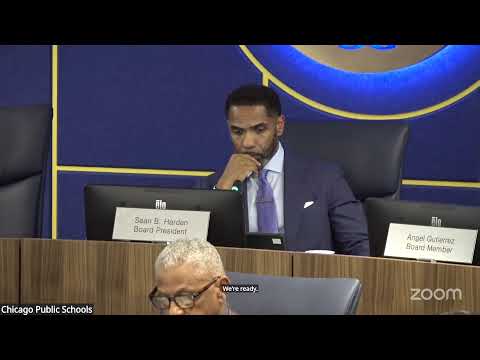
Public comment at the Chicago Board of Education agenda review committee on May 14 centered on charter renewal policy, proposed closure‑notice requirements and the transition of several charter campuses to district operation.
Public comment at the Chicago Board of Education agenda review committee on May 14 centered on charter renewal policy, proposed closure-notice requirements and the transition of several charter campuses to district operation.
Why it matters: The board is considering changes to charter renewal practice and a proposed resolution that would mandate an 18‑month notice period for closures and require charter operators to secure placement for students and employment for teachers. Speakers representing teachers, principals, charter operators and charter advocacy groups said the resolution and short renewal terms carry real consequences for families, staff and school planning.
Union and teacher advocates pressed the board to protect staff and students during transitions. Caroline Rutherford, vice chair of the Chicago Teachers Union charter division, urged the board to ensure educators at closing campuses can keep jobs and pay. “Guaranteed job interviews for educators from closing schools, no loss of pay for affected staff, and short term residency waivers to allow educators to make new arrangements,” Rutherford said, describing items the union considers “minimal steps” to keep communities whole. She said the June 12 deadline for educators to decide whether to exercise bumping rights makes urgency essential.
Several charter operators and supporters urged longer renewal terms and opposed parts of the proposed closure-notice resolution. Dr. Trey Childress, board chair of Urban Prep Academies, asked the board for a five‑year renewal for his network’s campuses, saying, “A multi year renewal allows for strategic planning, resource alignment, staff retention, and consistent academic programming conditions that research consistently demonstrates are necessary for school improvement and student growth.” Troy Boyd, Urban Prep chief operating officer, added that short‑term renewal decisions “undermine that very stability these students and families need and deserve,” and noted Urban Prep’s 16‑year record of graduates accepted to four‑year colleges.
Not all charter leaders supported the 18‑month notice proposal. Irene Bermudez, community relations coordinator at Chicago Math and Science Academy (CMSA), said her school opposed a resolution that would “mandate an 18 month notice period for charter school closures and impose the requirements of securing new placements for all students and employment for all teachers.” She argued the timeline and requirements could be impossible to guarantee when renewal votes are delayed.
Other speakers from the charter community said delayed renewal votes and short renewal terms have disrupted planning and left families and staff uncertain. Allison Jack of INX said, “We’re halfway through May and not even close to finalizing renewals for 21 campuses,” and called two‑year renewals “bad policy.” Ed Seideritz of Catalyst Schools and other charter leaders asked the board to reverse a trend toward short renewals and to prioritize long‑term renewals and investment.
What the board did: The public comment period concluded with no vote on a charter closure resolution during the session. Board members then moved on to the posted agenda items; no formal board action on the specific closure‑notice resolution or charter renewal policy is recorded in the transcript of this meeting.
Context and next steps: Multiple speakers linked concerns about short renewal terms and closure procedures to staff retention, school stability and student outcomes. Union representatives asked the district to negotiate memoranda of understanding to preserve staff pay and placements during transitions. Charter leaders asked for clearer, predictable renewal windows and longer terms to allow strategic planning. The board’s next regular meeting is scheduled for May 29, 2025, when renewal recommendations and any formal proposals could return for consideration.
Ending: The public comments underscored deep divisions among stakeholders over renewal length, accountability and the mechanics of school transitions. Board members did not take action on a charter‑closure resolution at this meeting; additional debate and any formal votes would appear in later board agendas or meetings.