Get Full Government Meeting Transcripts, Videos, & Alerts Forever!
Get email alerts on the Staffing And Course Parity topic
No spam. Unsubscribe anytime.
Hinsdale 86 board presses administration for data, options after parents say Hinsdale South lacks course parity
Summary
Public commenters and board members pressed Hinsdale Township High School District 86 administrators for detailed course-selection and staffing data and asked for modeling of alternatives after several parents said many courses run only at Hinsdale Central, leaving South students with higher denial rates.
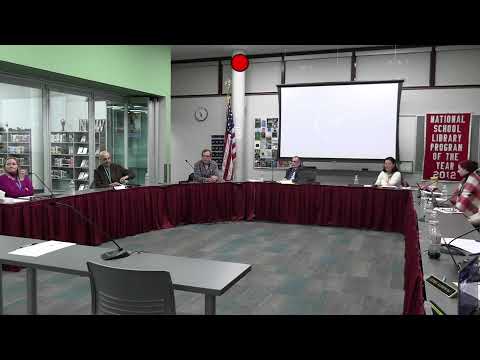
Hinsdale Township High School District 86 board members and administrators spent much of their Jan. 9 Committee of the Whole meeting addressing disparities in course offerings between Hinsdale Central and Hinsdale South, and directed administration to return with specific data and cost modeling before finalizing the staffing framework for 2025–26.
The issue surfaced during the meeting’s public-comment period, where several parents and community members said dozens of courses listed in the district’s program of studies run only at Hinsdale Central this year and not at Hinsdale South. Elena Galinski read a list based on a December 13 academic-committee report and said, “That is a total of 48 courses that according to Mr. Markey are running at Central this year, but not at South.” Later she told the board her review of supporting data raised the figure to 57. Adolf Galinski said the Central-only courses serve “an average of 1,955 of its students each semester” compared with “only 324” per semester for South-only courses and called the difference “six times” larger.
Why it matters: Board members said the course-disparity concerns reflect wider issues of proportionality in the district’s staffing and scheduling rules, and that the board needs better data before approving staffing levels. Member Heather Akris and others said the board should prioritize core sequential courses (English, math, science, social studies, world languages) so students at both schools have equitable access to graduation- and college-preparatory options.
Discussion and direction - Administration described the staffing-framework document used to convert student course requests into staff allocations. The framework’s default section-size divisor is listed as 25 students “give or take 2,” with a stated rule that courses with fewer than 15 selections default to not running unless they meet exceptions in the framework. Administrators said exceptions include prioritized sequential science and world-language courses and other listed circumstances. - Board members requested a new, campus-specific approach rather than a single flat divisor applied across both schools. Members suggested modeling lower minimums for South (examples discussed included a minimum of 7 students at South vs. 15 at Central) and asked administration to quantify the financial and staffing impact of any such change. - The superintendent and HR/operations staff said course-selection and master-scheduling remain in process through early February; final staffing actions are generally completed by March to meet hiring timelines. Jason Markey (assistant superintendent for academics) confirmed that the district collects students’ course requests but that the full set of “first-choice vs. final schedule” conflict data is only available after the district runs sectioning and finalizes the schedule; that historical dataset can be produced, but it will be retrospective (i.e., the board will receive previous-year data and modeled projections for the upcoming year).
Board actions and next steps - The board directed administration to produce (a) a by-campus, by-grade, by-department report of course requests and resulting sectioning outcomes from recent years; (b) financial modeling showing the incremental cost (FTE and budget impact) of changing default section-size thresholds (example: moving South to 18 or 15 or a lower minimum); and (c) a list of all courses with fewer than 15 selections on each campus, plus recommendations for which of those to run under the framework exceptions. Administration indicated the finance committee and HR committee will review proposed changes and that a March staffing timeline limits how quickly certain changes can be implemented. - The board agreed to form a short-term special board committee/task force to study enrollment, proportionality, and long-term solutions; several board members volunteered to participate and work with superintendent staff and the HR team to pull and analyze data.
Votes at a glance - Motion to adjourn closed session (to proceed to open session): carried, roll call 7–0. Votes recorded: Member Greenspun (Aye), Member James (Aye), Member Akris (Aye), Member Kartsounis (Aye), Member Ramon (Aye), Member Walker (Aye), Member Waters (Aye). - Motion to postpone action on a sole-source contract for real-time captioning services (Efficiency Reporting) to the Jan. 23 regular meeting: motion carried (roll-call Aye majority; action postponed to Jan. 23 as announced). - Consent agenda (routine items) approved as amended and separate approval of personnel stipends (item 9.2): carried, roll-call 6–0.
Quotes from the meeting capture the tenor of concerns. Kim Notaro, a frequent public commenter and parent, urged the board to “offer world history honors” at South and to add AP Seminar and AP Research at South so students have equitable access to advanced coursework. Member Heather Akris framed the board’s request for data as “proportionality” and said the district must consider whether a one-size-fits-all divisor is appropriate for schools with an enrollment difference of approximately 1,000 students.
Context and background Public commenters and several board members traced the problem to the district’s enrollment imbalance: Central currently enrolls roughly 1,000 more students than South, giving Central greater economies of scale for electives and singleton courses. Board members also referenced prior staffing-framework debates and a previously reported “delta” between courses running at Central but not at South. Administrators acknowledged the scheduling complexity: course conflicts (two requested courses offered in the same period), teacher availability, and space constraints all contribute to students not receiving first choices even when courses are offered.
What’s next Administration will return with the requested datasets and modeling, and the board formed a short-term special committee to work with the superintendent and HR/finance staff. The board emphasized prioritizing core sequential courses while recognizing any change could affect the district’s budget and collective-bargaining obligations.
Ending Board members repeatedly framed the discussion as student-centered: while union contracts, budgets and logistics limit options, several members said they will pursue creative scheduling and targeted staffing changes so South students receive more equitable access to courses that prepare them for college and careers.