Get Full Government Meeting Transcripts, Videos, & Alerts Forever!
Get email alerts on the Course Selection Staffing topic
No spam. Unsubscribe anytime.
Hinsdale Township High School District 86 board creates special committee to study course-selection and staffing disparities
Summary
After extended discussion of course offerings, enrollment patterns and student outcomes, the Board of Education voted 7-0 to form a special committee to study staffing, the program of studies and ways to increase equitable access to courses at Hinsdale Central and Hinsdale South.
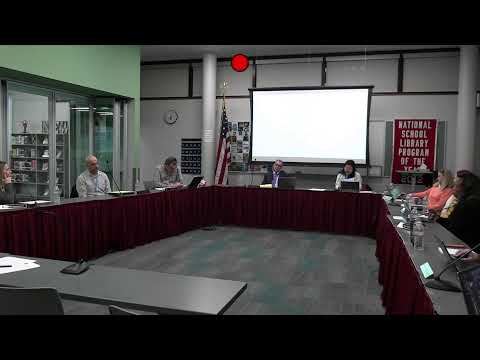
The Board of Education of Hinsdale Township High School District 86 on Jan. 23 voted unanimously to create a special board committee to examine course selection, the staffing framework and disparities in access between Hinsdale Central and Hinsdale South.
Superintendent Dr. Patrick Locke framed the issue as a trade-off among opportunity, cost and scheduling complexity, explaining that a larger program of study increases scheduling conflicts and single-section “singleton” courses that are hard to staff and schedule. "If we have a course at one place with a certain name, if it's a course at another school with the same name, it ought to mean the same things," Locke said, arguing for curriculum alignment while acknowledging resource limits.
The nut graf: The committee — chaired by Member Ramon with Members Waters and Akris volunteering and Superintendent Locke serving as the administration representative — will analyze short-term staffing choices for the coming school year and study longer-term models to increase equitable access to courses without unsustainable cost. The board directed the committee to report recommendations back to the full board.
District administrators and principals described several options that could change how many low-enrollment sections are run. Locke and staff outlined possible incremental steps this year (for example, running sections with fewer than a decided threshold of students) and longer-term ideas such as creating deliberate cadence for courses that run every other year, adding sections (a 0.2 FTE represents about 20% of a teacher's time), or scheduling creative travel periods between campuses. "As the size of the program of study increases, student course selections get distributed over more courses resulting on average fewer selections per [course] at a smaller school," Locke said.
Board members pressed for concrete cost estimates and clear datasets before making major staffing changes. CFO/treasurer Josh Stevenson and other staff said the district can produce cost estimates for “0.2” sections (estimates discussed ranged approximately $15,000–$35,000 depending on teacher placement; staff later cited roughly $24,000 per 0.2 as a midrange figure). Board members asked administration to provide per-course, per-department, and per-campus data showing “requested” versus “enrolled” counts, stacked/co-taught sections, historical runs, and the staffing implications.
Administrators said course selections were still being collected at the time of the meeting and that some decisions for the 2025–26 program of studies could not be made until after selections are finalized. Principal Michael Walsh and others emphasized that South offers a wide range of opportunities despite its smaller enrollment, and that running additional small sections would increase costs, require classroom space and complicate daily scheduling.
The board directed the special committee to examine two primary questions: which creative staffing solutions are viable, and how the district will define success (metrics might include rate of first-course requests fulfilled, course offerings, or student outcomes such as readiness indicators). Superintendent Locke said the committee should produce narrow, actionable work quickly and avoid sprawling into the district’s overall strategic planning.
Public commenters and community members who addressed the board during public comment urged the district to rely on full datasets when discussing disparities, noted programs such as AP offerings and music theory that face run-frequency issues, and pressed the board to prioritize graduation and postsecondary readiness when setting committee goals. Kim Notaro and Liz Miffa, among others, urged care in interpreting public datasets and supported a focused review.
Ending: The board set Member Ramon as committee chair and asked him to convene the first meeting in consultation with the board president, superintendent and recorder. The committee will include nonvoting community representatives to advise its work, following examples used in prior task forces.