Get Full Government Meeting Transcripts, Videos, & Alerts Forever!
Get email alerts on the Education Curriculum Alignment topic
No spam. Unsubscribe anytime.
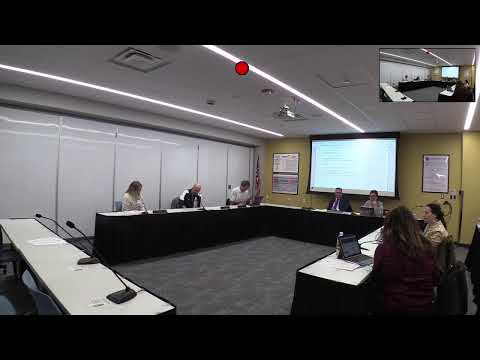
Hinsdale District 86 debates ninth-grade world history honors, alignment and access across its two high schools
Summary
The Hinsdale Township High School District 86 board heard a multi-hour discussion about differences between World History Honors at Hinsdale Central and World Studies Honors at Hinsdale South, reviewed data on student performance and access, and directed further work at the academic committee level on course alignment and opportunity.
Superintendent Mark Locke told the Board of Education of Hinsdale Township High School District 86 on Feb. 26 that the district's social studies "alignment remains incomplete," and asked the board to decide whether freshmen should have a common ninth-grade social studies experience across Hinsdale Central and Hinsdale South.
The question moved from presentation to wide discussion after public commenters and board members raised concerns about unequal access to honors-level courses and whether the district should bring Central's World History Honors course to South, or harmonize course offerings in another way. "World History honors is a case in point that should be available at Hinsdale South," parent Linda Burke said during public comment, adding that offering the class would increase access to AP preparation opportunities.
Why it matters: the board framed the issue as one of opportunity alignment — ensuring similar access to significant academic courses at both campuses — and of measurement, since social studies lacks a common external accountability test. Locke and district staff presented AP and SAT/ACT-related data as proxies for outcomes and asked the board whether the district should pursue a single, common ninth-grade experience, copy a current option across campuses, or continue to allow distinct courses at each school.
Locke said World History Honors at Central is not the same as the AP World History: Modern course and that "the world history honors course is not designed to prepare students for the AP World History Modern exam." He urged the board to consider whether the district should offer a dedicated AP World History course if the intention is to expand AP access.
Data and distinctions presented - The superintendent's slides showed that some social studies offerings have been aligned (for example, the required 11th-grade U.S. history), while others, including ninth-grade courses, have not. Locke noted AP courses are easier to align because of College Board syllabi and common exams. - District data reviewed by staff and discussed by board members indicated differences in participation rates and test-taking patterns: Central historically had many more students sit for the AP World History Modern exam (424 tests over a decade) than South (25 tests over the same period), a difference staff attributed to student self-selection rather than course design. - Preliminary fall preACT reading results shown by the superintendent found 76% of Central ninth-graders were “on target” on the preACT reading measure versus 46% at South; board discussion highlighted that South students nonetheless show marked gains by 11th grade.
Public comment and board concerns Parents and residents urged the board to protect access to honors-level classes at both campuses and to avoid a "system of schools" approach that, in their view, could institutionalize disparities. Kim Notaro, a parent, described World History Honors as "the place my son found his voice," and urged the board not to remove access to courses that lead to higher AP performance.
District staff and several board members emphasized practical constraints and next steps. Department chairs and building principals were credited for strong teaching across both campuses; several board members said they favored further work by the academic committee before any unilateral course transfers, describing the issue as too complex for an ad hoc change.
Next steps and committee work Board members agreed to continue the discussion at the academic committee, asking administration to provide more granular course-content comparisons, the district's program-of-studies descriptions, and SAT/ACT and enrollment breakdowns by course (including the number of students not enrolled in social studies each year). Superintendent Locke said staff would return with a recommended path after committee review and further stakeholder input.
Ending note The conversation on Feb. 26 did not produce a formal vote to change ninth-grade offerings; board members repeatedly asked for more analysis and for alignment work to be completed thoughtfully and collaboratively with teachers and department chairs.