Council approves development agreement for Power Drive affordable housing, staff explains TIF terms
Loading...
Summary
Council Bluffs approved a development agreement with Cornerstone CB Power Drive Partners LP and a related tax-increment financing plan; staff explained the 15-year term, 75% capture and a $9 million cap as part of a package intended to support road costs and 100% affordable units.
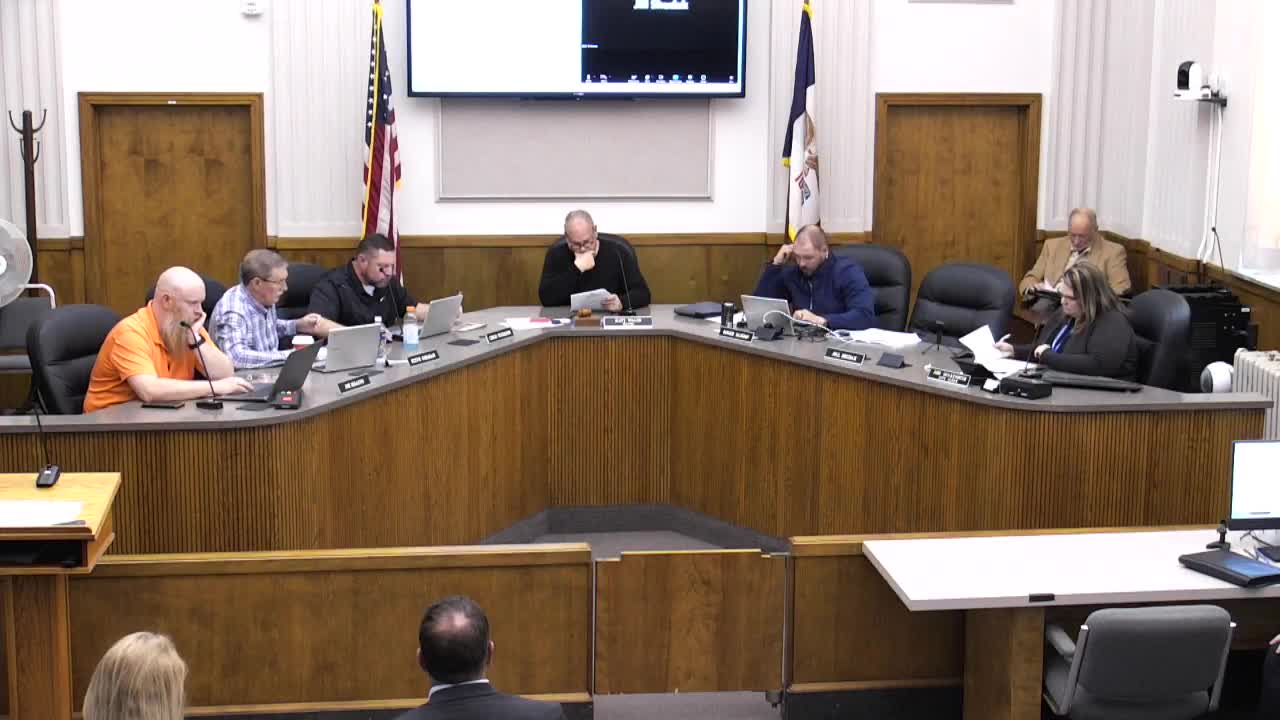
The City Council on April 21 approved a development agreement with Cornerstone CB Power Drive Partners LP and held a public hearing on the related tax-increment financing (TIF) package.
Staff explained the TIF arrangement and answered council questions about term, capture percentage and the cap. A council member asked for an explanation of how the TIF was structured; staff said the package being considered uses a 15-year term with 75% tax capture and a cap of $9,000,000 to support public infrastructure, including a costly Power Drive road improvement near the Sam’s Club area.
Why it matters: Staff said the developer proposes a 100% affordable multifamily project. For low-income housing tax credit projects the assessment and rollback rules differ from standard residential treatment, and that can affect the modeled tax revenue. Because the project is 100% affordable, staff said the project could qualify for an extended valuation clock in some models, but the city made a policy decision to set terms comparable to earlier incentives for multifamily projects in order to make costs for road improvements feasible.
Staff noted the developer projects roughly a $30,000,000 valuation and that the city compared the Power Drive package to a prior incentive provided to another project (Annex Group on South 19th Street) where a $10,000,000 incentive was offered. City staff said roughly $1,000,000 of the $9,000,000 cap would be the city’s contribution specifically toward Power Drive costs, with the remaining incentive structured to reach parity with past deals.
Council discussion included questions about how TIF value is modeled, the distinction between greenfield farmland assessments and other sites, and the city’s general practice of limiting incentives to a percentage of project costs (staff said the city typically aims to stay near 15% of project cost but that affordable housing deals can exceed that target because of program constraints and policy priorities).
The council approved the development agreement after a motion and second; no written protests were recorded at the public hearing.
No timeline for construction or final developer financing milestones were provided in the council discussion recorded during the hearing.