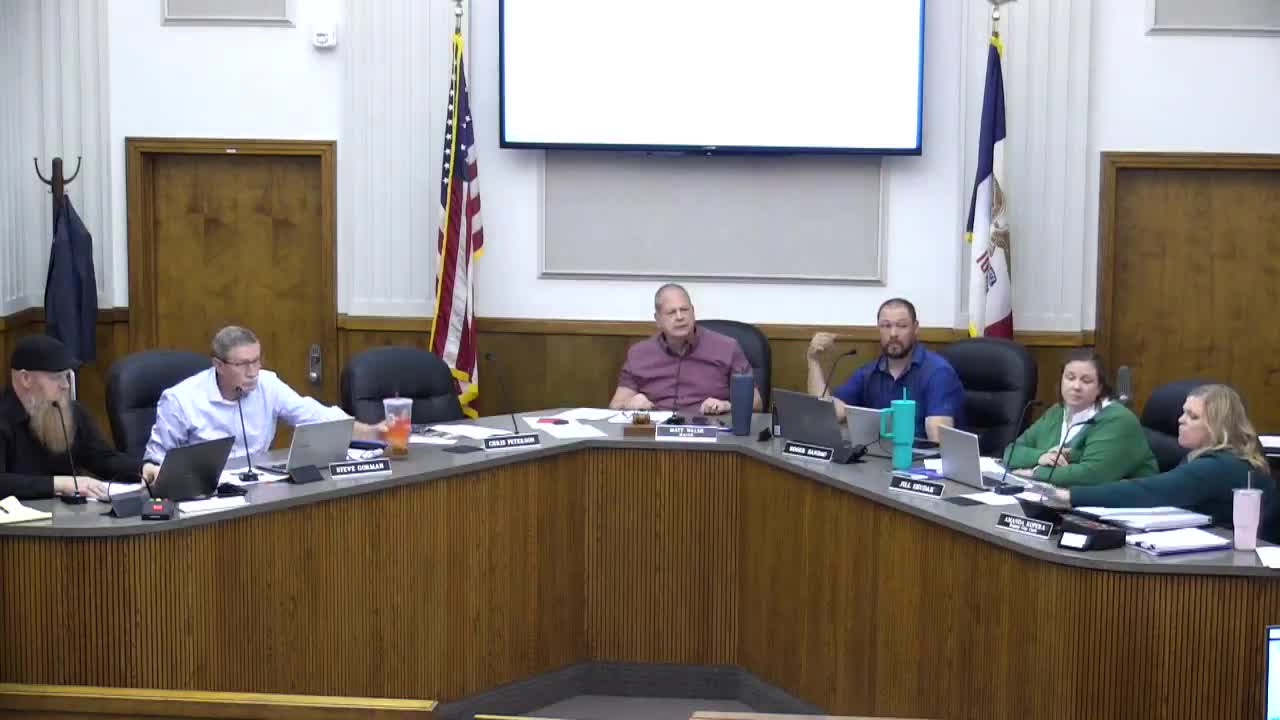
Council rejects motion to pursue master plan for Dodge Riverside Golf Club
Loading...
Summary
The Council Bluffs City Council voted down a council resolution to reclassify the Dodge Riverside Golf Club property for possible redevelopment and master planning after hours of public comment and debate over flood risk, historic donation terms and housing needs.
Council Bluffs city council voted on and rejected a resolution to reclassify Dodge Riverside Golf Club land as a transitional preserve that could be offered for redevelopment and a formal master-planning process.
The vote prevented the city from taking the next step requested by Iowa West Foundation and others to solicit proposals and start a publicly guided master plan. Supporters said the site could produce housing, jobs and new tax revenue; opponents said the land was a long-standing public gift, is vulnerable to river flooding and should remain parkland.
The resolution’s backers said a conceptual feasibility study showed large potential tax benefits that merited further study. “This project is more than a development. It's a signal that Council Bluffs is preparing for the future,” said Chris Laferla, president and CEO of the Council Bluffs Chamber of Commerce, arguing the site could help attract workforce and families. Supporters also included regional health and education leaders who said added housing could stabilize staffing and school enrollment.
Opponents across several speakers emphasized the site’s history and environmental risks. “Once we pave over this historic and vibrant green space, there's no going back,” warned Diane Story, who cited the Dodge family donation and the course’s longtime public use. Several speakers and a retired U.S. Army Corps of Engineers engineer raised concerns about river flood risk, the need for major fill and pump stations, and whether levee and drainage systems could safely support dense residential development.
Council members voiced mixed views during a lengthy council discussion that followed public comment. Some members said they wanted more time, public engagement and technical work — including consultations with the U.S. Army Corps of Engineers and more detailed market and infrastructure analyses — before supporting a master plan. Others argued the city needed additional revenue and housing options and that examining a feasibility study was a prudent next step. Several council members urged careful, public master planning if the project moved forward.
After debate, council members called the question on the resolution. The motion failed when the council did not secure a majority to proceed; the mayor recorded the outcome as a failed motion. The council did not authorize sale or development; the vote only declined the specific step of reclassifying and moving the property into a transitional preserve for master planning and solicitation.
The council’s decision leaves the golf course under existing city ownership and opens the door to additional study, public workshops or alternative proposals in future meetings. Officials said any formal development proposal would require separate approvals, detailed engineering, floodplain review and further public hearings.
Speakers and officials suggested next steps could include expanded public engagement, engineering reviews, and a formal master-plan process if the council later agrees to resume the effort.