
Grants commission delays final-report approvals to September after members cite late submissions, large files
Get AI-powered insights, summaries, and transcripts
Subscribe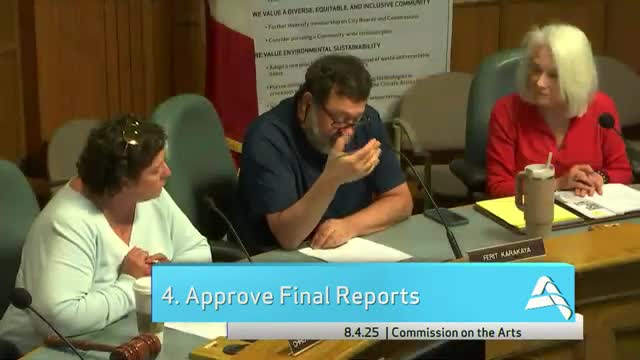
Summary
The Grants Commission voted to review and approve final grant reports at its September meeting after commissioners said large, late files made timely review difficult; staff agreed to send initial materials earlier and follow up with remaining documents.
The Grants Commission voted to move final approval of recent grant final reports to its September meeting after commissioners said they received large files too close to the meeting to review them fully. Commission members said some agencies submitted voluminous materials late in the review cycle, leaving commissioners little time to evaluate how programs used city funds. Commissioner (unnamed) said she received the packet "on Thursday evening" and did not have time to go through the whole thing, a concern echoed by other members. "I received it on Friday I mean, Thursday, and that meant I received it on Thursday evening. So I did not really have the chance to go through the whole thing," she said. The commission discussed several options: moving the application/report deadline earlier, distributing what is available sooner and sending the remainder as it arrives, adding a short grace period (members suggested about 48 hours), or shifting the commission's August meeting to a different week. Staff said they could try sending what was available earlier in future cycles. A commissioner noted the annual grant year ends June 30, and organizations often spend remaining funds close to that date, which contributes to late submissions. Staff suggested commissioners have a month or two after receipt to follow up with agencies as needed when making next-year recommendations. Formal action: a motion "to approve moving our final report approvals to September" was made and seconded and approved by voice vote; the commission will review those final reports at its September meeting. The change affects the schedule for reviewing 2024–25 annual grant final reports and related special-project final reports; staff said they will attempt to distribute materials in smaller batches when possible and consult with organizations about realistic submission deadlines. Less urgent procedural items: commissioners discussed the size of the monthly packet (one member cited a 182-page packet of final reports and promotional materials) and suggested considering limits on nonessential attachments or establishing word limits for narrative sections in the future.