
Board upholds zoning director: 6607–6609 Sixth Street treated as single‑family after prolonged vacancy
Get AI-powered insights, summaries, and transcripts
Subscribe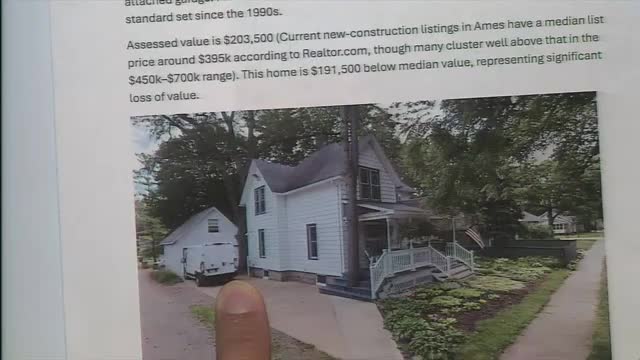
Summary
The Ames Zoning Board of Adjustment denied an appeal and upheld the director’s determination that a duplex at 6607/6609 Sixth Street no longer met the code’s definition of a preexisting two‑family dwelling because the second unit had been vacant for more than the allowable discontinuance period.
The Ames Zoning Board of Adjustment on Sept. 10 denied an appeal challenging the zoning enforcement officer’s determination that the structure at 6607 and 6609 Sixth Street no longer qualified as a preexisting two‑family dwelling because the second unit had been vacant for a period exceeding the discontinuance threshold established in the city code.
City staff explained the appeal centered on the meaning of the term "continuous use" in the city’s definition of preexisting two‑family dwellings. The structure had been converted to two units in the late 1970s and had a valid letter of compliance until 2018, when the second unit’s letter was not renewed and that second unit became vacant. Staff advised the board that the city’s definition of "preexisting" requires actual ongoing occupancy or a valid letter of compliance; in other words, the use must have remained continuous since the relevant code date. "Discontinuance would mean occupancy of the structure as a single dwelling unit, or expiration of the letter of compliance or physical alteration to the structure," staff said.
Kristen Tibben, a realty representative listing the property, said the daughter of the owner had pursued due diligence and a pre‑sell inspection and that the owner’s declining health and need for long‑term care contributed to the lapse in occupancy and renewal. "I worked with the daughter; the dad is no longer able to make decisions on his own," Tibben said. She said there was buyer interest but that the buyer would prefer continued use as a rental.
Board members discussed the ordinance language and precedent implications. Several members said the code’s definition and staff’s prior guidance treat a long vacancy as discontinuance for purposes of preexisting two‑family status, and that allowing otherwise would undermine the intent of the standard. A motion to uphold the director’s decision and deny the appeal carried.
Outcome: Appeal denied; structure is treated under current zoning as a single‑family dwelling for occupancy and rental‑limit purposes. The property owner may appeal the board’s decision to a court of record within 30 days after filing.