
Planning board recommends conditioned approval for 907 North Ocean Shore driveway variance
Get AI-powered insights, summaries, and transcripts
Subscribe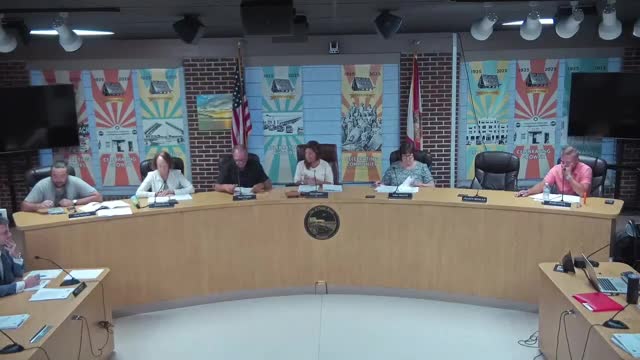
Summary
The Planning and Architectural Review Board on Aug. 5 recommended approval, with conditions, of a variance for a mixed-use project at 907 North Ocean Shore that would allow a narrower shared driveway than the land development code typically requires.
The Planning and Architectural Review Board on Aug. 5 recommended approval, with conditions, of a variance for a mixed-use project at 907 North Ocean Shore that would allow a narrower shared driveway than the land development code typically requires.
The recommendation, made during a quasi-judicial variance hearing following a conceptual site-plan presentation, would permit a total shared-drive width of 16 feet with 10 feet located on the applicant's lot; the board tied the recommendation to the applicant's plan to relocate required handicap access/parking from the rear to the front area where feasible. The board's recommendation will be forwarded to the City Commission for final action.
The applicant, represented by architect Joseph Zulli of JPA and project architect Deborah Berg of JPA, described a two-story mixed-use building with two ground-floor commercial units (about 686 square feet each) and a single residential unit above, a two-car garage at the rear, and one rear handicap space. Zulli said the 50-foot-wide lot and an existing adjacent three-story building with a north-side cantilever and egress windows create a practical constraint that prevented placing the building on a zero-lot line and drove the variance request. "It's a mixed use project ... 907 North Ocean Shore," Zulli said during the presentation. He said the lot slopes about 2 feet from A1A to the west, requiring site grading and a 10-foot rear extension for stormwater, and that the owner intends the upstairs unit for long-term lease rather than short-term rentals.
Why it matters: board members and staff said the parcel is within the mixed-use overlay along A1A, where the code and the municipality's 2002 mixed-use design guidelines favor placing parking to the rear and maintaining pedestrian-friendly frontage. The literal reading of the driveway standard (two 12-foot lanes totaling 24 feet) would have forced a reduction of ground-floor commercial footprint and a wider two-way drive than the applicant and some board members regarded as necessary for a low-trip small-business site.
Board discussion focused on three issues: fire and life-safety access between closely spaced buildings, the practical width of the existing shared driveway, and handicap access obligations under building and state codes. Board members and staff repeatedly referenced the design guidelines and the land development code's six-criteria test for variances; planners had recommended findings the board should consider when making a recommendation to the commission. The applicant noted the shared-drive easement and the existing north neighbor building's overhang as conditions they did not create.
Board member concerns included emergency access with zero or near-zero lot lines, the long-term risk that the neighboring lot could be redeveloped and change access conditions, and whether a front-parallel handicap space could meet both the mixed-use guideline intent and state accessibility codes. One board member noted previous mixed-use developments on A1A that operate with narrow, rear-access drives, citing Tony's Wine Cabana and the Purple Donkey as local examples.
A motion to recommend approval as requested was not the final outcome. Instead, a motion carried to recommend approval with the condition that the total driveway width be 16 feet (10 feet on the applicant's property); the motion also asked the applicant to resolve handicap-access location consistent with code or applicable approvals. The board's recommendation will be included with staff findings and forwarded to the City Commission for its quasi-judicial review.
What the board did not decide: the Planning and Architectural Review Board did not issue a final city permit or authorize construction; the board's action is a recommendation to the City Commission. The fire department and state building code requirements (including Florida Building Code accessibility sections and any federal ADA obligations) remain applicable and may require separate approvals or accommodations at permitting.
The applicant said a substantially identical layout had been brought to the board in May 2024, where staff recommended approval but the board tabled the matter for comments that the applicant says have now been addressed. The planner's formal findings and the six statutory/ordinance criteria for variance approval are in the staff report that will accompany the commission packet.
Next steps: the board's recommendation will be placed on the City Commission agenda for further review and final action; staff indicated the item is expected to go to the commission on Aug. 20 (date as discussed in the meeting).