
Longmont leaders press state for clarity after conflicting certification timelines for recovery residence
Get AI-powered insights, summaries, and transcripts
Subscribe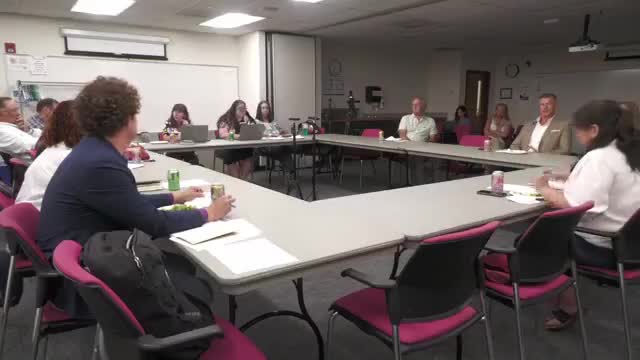
Summary
City officials and state legislators discussed regulatory gaps and inconsistent timelines among state agencies, a private contractor and local authorities surrounding certification of a recovery residence that also housed registered *** offenders, and explored legislative and audit options to improve accountability.
Longmont — City council members and state legislators spent a long portion of a Aug. 18 legislative dinner discussing a recent case in which a locally controversial recovery residence opened while multiple agencies gave inconsistent accounts of certification and occupancy.
Council members described a sequence of unclear or conflicting representations from a private contractor and state agencies about when the house was certified and when residents moved in. City staff said that those inconsistent timelines made it difficult for the city to apply its own public-safety and building-review processes.
Sen. Katie Wallace and Rep. Karen McCormick told the council that several avenues exist to seek clarity and accountability at the state level. Wallace said oversight tools include Smart Act hearings (the legislature’s state agency oversight process) and, potentially, requests to the legislative audit committee for a targeted audit of the Behavioral Health Administration’s certification processes. She also said some enforcement questions are routed to the attorney general and that legislators are pursuing answers about which state office has enforcement authority for agency compliance.
Neither the city nor the state representatives proposed immediate rulemaking at the meeting; instead, they described multiple, overlapping issues that must be disentangled: state-level certification and oversight by the Behavioral Health Administration (BHA); private contractor activity; the role of CAR (named in meeting materials) and the Twentieth Judicial District’s involvement in supervising some residents. Council members emphasized that CAR and other contractor entities are not state agencies and that the difference matters for information access and accountability.
Council members described that local ordinances had been used to limit the number of registered *** offenders that may live in a single residence, but that legislative changes affecting occupancy and zoning have created gaps that allow congregate living arrangements to proceed without the same life-safety checks municipalities previously relied on. City staff and officials raised specific life-safety concerns — such as occupancy counts, building code classification (change-of-use from residential to higher-occupancy codes) and sprinkler or alarm requirements — that can be obscured when a property’s stated use does not match how it is actually used.
The assembled legislators advised the council that statutory fixes could be drafted for regular session. They also said a CML (Colorado Municipal League) policy proposal is in circulation and that municipalities can seek to influence any CML-sponsored bill by sharing local examples and proposed language. Wallace cautioned that some legal protections — for example, federal disability law protections for people in recovery — can limit the scope of possible changes and must be considered in drafting state statute.
Discussion only: the meeting did not produce a legislative text or a vote. Council members asked legislators to press for agency answers and to use oversight tools; legislators said they would follow up in Smart Act hearings and consider audit requests to resolve remaining questions.
Ending: City officials asked for clearer definitions in any future legislation (for example, definitions distinguishing “recovery residence,” “mental health transitional living facility,” and residences housing individuals under judicial supervision). Legislators said they will remain engaged and that coalition-building through organizations such as CML will be important to advance changes that municipalities want.