
State lawmakers say special session needed to plug budget hole after federal tax changes
Get AI-powered insights, summaries, and transcripts
Subscribe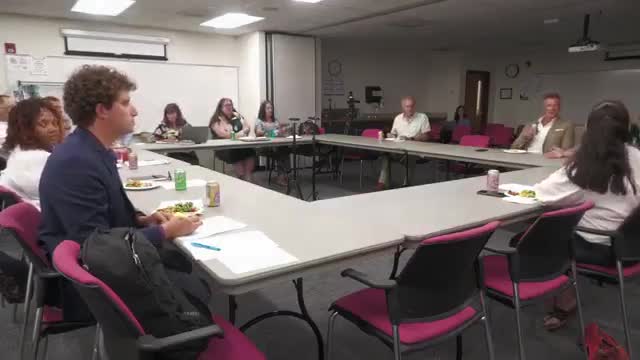
Summary
Longmont — State Sen. Katie Wallace and Rep. Karen McCormick told Longmont City Council members on Aug. 18 they will use a special legislative session to address a state budget shortfall they attribute to changes in federal tax law (HR 1) and to protect school meal funding, health insurance affordability and other programs.
Longmont — State Sen. Katie Wallace and Rep. Karen McCormick told Longmont City Council members and staff on Aug. 18 that a short, called special session will be used to plug a budget shortfall created by changes in federal tax law and to protect state programs that their constituents rely on.
Wallace said Colorado’s tax code is tightly tied to federal calculations, and that changes in the federal tax law known in the meeting as “HR 1” reduced state revenue unexpectedly after the July 4 signing. “Part of the reason for that is how Colorado’s tax code is tied to the federal level,” Wallace said. She described the special session as urgent because the state now faces a shortfall that cannot wait until the regular legislative session.
Why it matters: Wallace and McCormick said the revenue shock threatens programs that affect residents directly — school meal programs, SNAP administration, insurance subsidies and some housing supports — and that the special session is intended to prevent near-term harms.
Most immediately, Wallace described two ballot measures connected to school meals that she said the legislature is working to preserve. She said one measure identified in the meeting as “Proposition LL” will remain unchanged on the November ballot and that a companion initiative will be adjusted so collected funds first ensure a universal school meals program is fully funded, with excess used to support county and state SNAP administration. “As a result of it, we’ve served 600,000 meals to date and we save families $1,300 per child per year,” Wallace said.
Wallace and McCormick also described the effect of the federal change that eliminated the premium tax credit that helps people buy coverage on the individual market. Wallace said that, in Boulder County alone, premiums could rise by about 106% on average beginning in October if state action does not intervene. McCormick said the legislature is considering measures to shore up affordability, including using the state’s reinsurance program and other tools to blunt premium increases.
Other measures Wallace and McCormick described as on the table for the special session included: adjustments to the state sales tax vendor discount (a small percentage that vendors keep when remitting sales tax), proposals to decouple certain business deductions from federal rules, expanding the roster of foreign jurisdictions that must pay Colorado tax, and options to allow the state to sell future tax credits to produce near-term revenue. Wallace said some of those items are expected to generate tens of millions of dollars toward closing the gap.
Both legislators emphasized some actions will need to wait for the regular session — for example, Medicaid cuts referenced in the federal changes will not take effect until 2027 — but they said the loss of the premium tax credit is immediate and requires short-term fixes. McCormick said the state’s individual market and the Connect for Health Colorado exchange are at risk and that the changes are likely to cause enrollment and affordability problems unless the state intervenes.
Council members asked several process questions, including how quickly bills can be drafted and signed during a special session. The legislators said bills can move rapidly in a special session if they have sponsors and consensus, but acknowledged time is short and asked municipal staff to flag any local concerns as bills appear.
Discussion only: Council members and legislators discussed potential proposals and tradeoffs; no formal council action was taken at the meeting. Wallace and McCormick repeatedly framed the special session as triage to avert immediate harms while reserving more complex policy changes for regular session.
Context and next steps: Wallace said she plans to use oversight tools, including Smart Act hearings and follow-up with state agencies, to monitor implementation and to press for accountability where federal changes flow through state programs. Council members were urged to review bills posted as the special session proceeds and to provide local feedback quickly because the special session timeline is compressed.
Ending: Wallace and McCormick left council members with contact points and asked municipal staff to pass along local examples of harm and any technical fixes that should be considered during the special session.