
Longmont officials press for clarity after recovery residence and offender-placement problems
Get AI-powered insights, summaries, and transcripts
Subscribe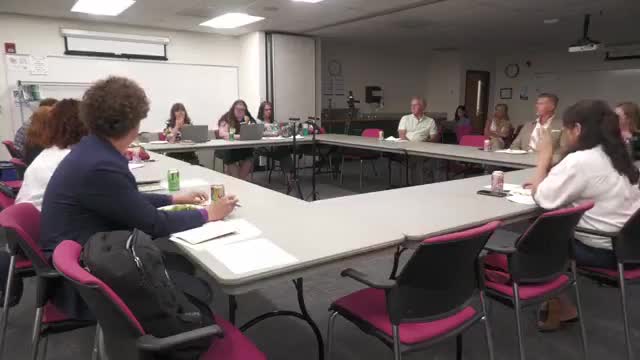
Summary
Longmont officials told state legislators on Aug. 18 that inconsistent agency certification and unclear bill language left gaps in oversight after a local recovery residence accepted people on the state registry; staff called for legislative oversight and clearer definitions.
Longmont city officials and state lawmakers discussed Aug. 18 how regulatory changes and agency processes left gaps in oversight after a recovery residence in the area accepted people on the state sex-offender registry. The meeting brought together city council members, city staff, Sen. Katie Wallace and Rep. Karen McCormick to separate two related issues: regulation of recovery residences and placement of registered offenders.
City staff described inconsistent timelines and mismatched agency statements about when the residence was certified and when people moved in. A staff speaker summarized the problem: "We have Avara Solutions misrepresenting a certification on March 6. We have CAR saying it was certified on March 25. BHA said it was not certified on March 31," and the staff member said the inconsistent messages undermined trust in the certification process. (Speaker listed in this article as "Staff member" as the transcript attributed the sequence to city staff during the meeting.)
Why this matters: Council members said municipal ordinances rely on predictable state processes to protect life-safety and neighborhood standards. They and state legislators identified two separate but overlapping legal issues: (1) how recovery residences are defined and certified by the Behavioral Health Administration (BHA) and its contractors, and (2) how state laws that affect occupancy and local zoning interact with rules that govern placement of registered offenders.
What officials said they would do: - Legislative oversight and audits: Sen. Wallace and Rep. McCormick said they will pursue answers through Smart Act oversight hearings and other legislative oversight and may ask the legislative audit committee to examine agency implementation and enforcement of certification rules. "We have the Smart Act hearings that come in January and February... those are sometimes almost like inquisitions when we have a particular issue that needs sunlight on it," Wallace said. - Work on bill language: City members asked the Colorado Municipal League (CML) to consider clearer bill language that distinguishes recovery residences from placements of registered offenders and that would allow municipalities greater ability to limit the number of unrelated occupants in specific congregate or high-acuity settings. Staff noted a draft CML proposal would require placement of registered offenders to be at least 1,000 feet from schools; staff said the draft does not define recovery residences in a way that resolves local concerns. - Local implementation checks: City staff said the change in permitted land uses and building 'change of use' reviews now triggers a different life-safety code (moving from residential codes to commercial/assembly-type standards in some cases), and staff said Longmont will use building-permit and fire-safety reviews to address occupancy and life-safety concerns going forward.
Limits and unresolved questions: Officials repeatedly cautioned that some legal protections—most notably Americans with Disabilities Act (ADA) protections, and limits on retroactive zoning changes—constrain the scope of what a city or the state can do. Several speakers emphasized that registered-offender placement decisions may involve district courts or the Department of Corrections and are not always directly controlled by BHA. City and state representatives said full answers require agency records and legal review; Wallace said the legislature is still waiting on an opinion from the attorney general’s office about enforcement authority.
Ending: City and state officials agreed to keep the issue separated into two tracks—recovery-residence certification and registered-offender placement—and to pursue coordinated legislative language through CML and Smart Act oversight to improve agency transparency and local safety checks.