
State senators, representatives brief Longmont council on special session after federal tax changes
Get AI-powered insights, summaries, and transcripts
Subscribe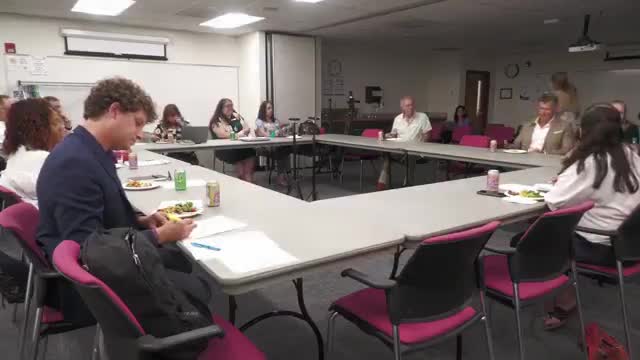
Summary
State Sen. Katie Wallace and Rep. Karen McCormick told Longmont officials that changes in federal tax law (referred to in the meeting as HR 1) created an immediate revenue shortfall in Colorado; the special session will prioritize fixes to school-meal funding, health insurance premium assistance and other tax adjustments.
State Sen. Katie Wallace and state Rep. Karen McCormick briefed Longmont City Council members on Aug. 18 about Colorado’s special legislative session and why lawmakers returned to Denver to repair a budget gap created by recent federal tax law changes. "We are heading into the special ... the tax **** budget bill coming, from the federal level, really tore a hole in the state's budget," Wallace said. The briefing focused on measures to shore up school-meal funding, stabilize the individual insurance market and make targeted tax-code changes.
Wallace said the federal changes immediately altered Colorado’s revenue because state income-tax rules are tied to federal adjusted gross income. She told the group that the state’s balance was disrupted, forcing leaders to consider dipping into reserves and to weigh a range of revenue and decoupling options during the special session. "We had a balanced budget on July 1. Come July 4 and the signing of HR 1, that bill was blown apart," she said.
Why this matters: Wallace and McCormick said the special session must move quickly because Colorado’s constitution requires a balanced budget. McCormick added that the session will include short-term steps to preserve benefit programs and longer-term fixes in regular session. "We have a constitutional requirement here in the state of Colorado to have a balanced budget. As of July 4, we do not have a balanced budget for this fiscal year," McCormick told the council.
Key items described to Longmont officials included: - School meals: Wallace said the special session will change ballot language for a voter-approved school-meal initiative so collected funds first keep universal school meals fully funded; any excess would then be available for county and state programs such as SNAP administration. Wallace said the universal meals program has served about 600,000 extra meals to date and that families save an estimated $1,300 per child per year as a result. - Health insurance: Wallace said a federal change removing the premium tax credit would raise individual-market premiums; she stated that Boulder County premiums could rise about 106% on average beginning in October if the state does not act to provide relief on the exchange. McCormick said the special-session health items include measures to protect Medicaid services that could lose federal funding and to shore up reinsurance/affordability mechanisms. - Revenue options: Officials discussed a slate of potential fixes that legislators will consider during the special session, including selling future tax credits, decoupling parts of the qualified business income deduction, revisiting regional/home-office tax reductions, expanding the list of foreign jurisdictions that must pay state taxes, and adjusting the retail sales-tax vendor discount. Wallace described those items as a portfolio of choices intended to fill the shortfall and preserve core programs.
Details and limits: Wallace and McCormick emphasized trade-offs and timing. Some Medicaid cuts described in the federal change do not take effect until 2027 and will be handled in the regular session; other items (such as changes to the premium tax credit) require immediate attention. Wallace said some items are being evaluated for their revenue impact in the tens of millions to low hundreds of millions of dollars, but she framed those figures as rough ballpark estimates.
Next steps: Wallace encouraged local officials to review bills already posted and to flag major local concerns; several sponsors posted drafts publicly within days. Lawmakers said some items could move quickly in a short special session but others will wait for regular session review.
Ending: Wallace and McCormick offered to continue answering local questions and to raise concerns in Smart Act oversight hearings and other forums; they urged local officials to provide specific problem descriptions and to work with state staff as the special session unfolds.