
Parliamentarian tells San Luis council: points of order can interrupt, chair cannot unilaterally adjourn
Get AI-powered insights, summaries, and transcripts
Subscribe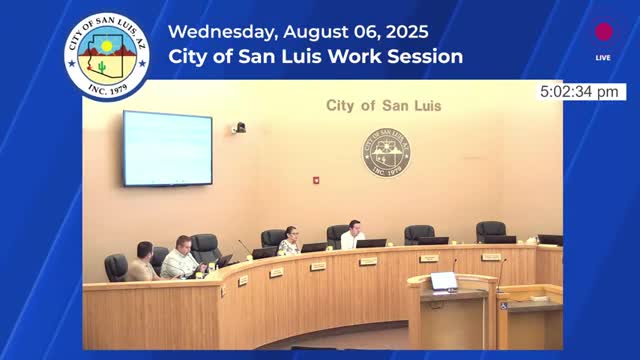
Summary
Parliamentarian Timothy Wynne gave a detailed training on Robert's Rules of Order for San Luis City Council members, explaining when points of order may interrupt, the chair's duties in ruling, limits on the chair's authority to recess or adjourn, and voting thresholds including majority and two‑thirds rules.
Parliamentarian Timothy Wynne told the San Luis City Council on June 4 that members may interrupt a speaker to make a timely point of order and that the chair must then stop and rule on it. Wynne, a parliamentarian with Perfect Rules Inc., said the member need only say "point of order" and the presiding officer must pause the meeting, ask the member to state the point and then make a ruling. "The member may not speak against the member state," Wynne said, explaining that the chair must decide whether the point is "well taken" and see to it that any rule violation stops. Wynne emphasized why the assembly, not a single officer, controls recesses and adjournments. "The chair does not have the authority to simply declare a recess or to declare the meeting adjourned, unless either a time has already been selected by the assembly or at that time the assembly decides," he said, adding that a recess may also be obtained by unanimous consent or a majority vote. The presentation covered common tools officers can use during debate. Wynne explained the "previous question" (often called "calling the question") and said correctly ordering it requires a member with the floor to move it, a second, no debate and a two‑thirds vote. He advised members that a motion to limit or end debate also requires a two‑thirds vote because it removes debate rights from others. Wynne gave a concise definition of "majority": he said in parliamentary usage majority means "more than half," and warned that terms such as "51%" or "half plus 1" are not equivalent in all circumstances. He also illustrated how a tie vote on a motion requiring a majority results in the motion's defeat because it did not receive "more than half." Council members asked several procedure questions. Councilmember Luis Cabrera asked whether a point of order can be made against the chair if the chair is the one making the alleged violation; Wynne said yes, and that the chair's ruling stands "until reversed by a majority." The training was largely instructional and included multiple hypothetical scenarios and audience Q&A; there were no formal motions or votes arising directly from the presentation. Wynne also pointed attendees to Robert's Rules of Order for reference, noting later in the session that "section 23" discusses points of order and that the book's end‑matter includes a quick reference table of motions. The program continued with Q&A and then moved on to the next agenda item.