Redevelopment commission seeks $250,000 REDI grant for road to Whitewater Processing as TIF extension draws questions
Loading...
Summary
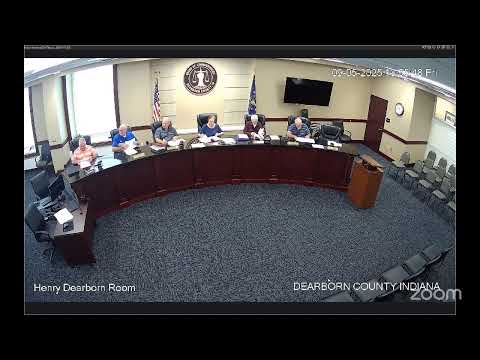
The Dearborn County Redevelopment Commission asked the county council on Wednesday for permission to apply for a $250,000 REDI grant to help build a reconstructed county road that provides access to the Whitewater Processing site.
The Dearborn County Redevelopment Commission asked the county council on Wednesday for permission to apply for a $250,000 REDI grant to help build a reconstructed county road that provides access to the Whitewater Processing site. The council approved the application.
The request came during a broader discussion about a proposed reallocation of two parcels into an extended West Harrison tax‑increment financing (TIF) allocation area, an action that would reset the allocation base to Jan. 1, 2025 and extend the TIF for 25 years. Redevelopment and county staff told the council that Baker Tilly had produced a draft tax‑impact statement showing no immediate revenue impact to the county general fund from the proposed retif.
Why it matters: extending the TIF would divert future tax increment from the county general fund and other underlying taxing units into the redevelopment commission’s allocation for a longer period (the staff explanation described the retif lasting 25 years from 2025, to about 2050). Redevelopment officials said the additional time would provide a sustainable revenue source to pay for infrastructure needs — for example, radios, fire trucks and potential multimillion‑dollar water infrastructure projects — in West Harrison and related industrial areas.
Jim Deaton, president of the Redevelopment Commission, told the council the grant would support construction of a “new county highway” into Whitewater Processing and asked the council to allow the commission to submit the REDI application.
A county staff presenter summarized the draft tax‑impact analysis: “The tax impact revenue, as a result of this proposed retif is $0 according to Baker Tilly’s tax impact statement analysis,” the staff member said, citing the firm’s draft. The presenter and other speakers cautioned that the analysis reflects current law and assumptions and could change with state tax law changes.
Council members expressed two main concerns: that the county general fund and other taxing units would not receive increment from new development in the affected parcels until the retif period ends, and that retifting shifts revenue toward redevelopment rather than directly to the county. Redevelopment supporters responded that TIF revenue has funded local projects — including a $25,000 radio purchase and a proposed $250,000 contribution toward a fire truck — and that the commission could pass funds through to taxing units if its board chose to do so.
Council members were directed to a Redevelopment Commission meeting at 5 p.m. Monday where Baker Tilly will present the tax‑impact analysis in open session; staff said the presentation will be streamed live and that additional questions should be raised at that meeting.
Formal action taken: the council voted to allow the Redevelopment Commission to apply for the $250,000 REDI grant to support the road improvements. During the motion and roll call, several council members registered “no” and several “yes” (the motion passed). The transcript records that Glenn and Dennis voted no; Mark, Tim and Doug voted yes and the motion was recorded as passing.
What remains unresolved: the county council did not adopt or veto any change to the TIF allocation area at the meeting. Redevelopment staff said a formal retif decision is a separate process; they also noted that redevelopment may pass funds back to the county or dissolve the TIF earlier if conditions change.
For follow‑up: the Baker Tilly presentation Monday evening and any formal retif resolution will be the next opportunities for public and council review.