Get Full Government Meeting Transcripts, Videos, & Alerts Forever!
Get email alerts on the Water Quality topic
No spam. Unsubscribe anytime.
Council approves first reading to amend cross-connection ordinance; HydroCorp to begin residential surveys
Summary
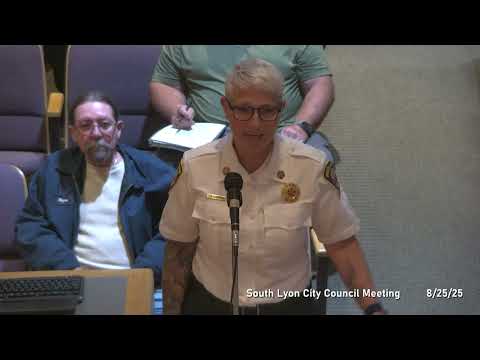
Council approved a first reading to amend Chapter 94, Article 2 (cross connections) and authorized residential cross-connection surveys conducted by HydroCorp; staff said 138 letters have been sent to homeowners and surveys will focus on softeners, sprinklers and hose-bib protection.
The City Council on Aug. 25 approved a first reading to amend cross-connection provisions in Chapter 94, Article 2 of the South Lyon Code of Ordinances and authorized HydroCorp to assist with residential cross-connection surveys.
Staff said the revised ordinance language aligns South Lyon’s code with updated cross-connection program rules. The amendments indicated in the meeting packet include changes to section 94-65 (cross connections), section 94-66 (enforcement), section 94-173 (continued violation) and add a new remedies section 94-33.
Staff described the survey work HydroCorp will perform: as of the meeting HydroCorp had sent 138 letters and will focus on subdivisions (Trotters Point was cited) with in-home surveys to identify common cross-connection risks. Inspectors will look for plumbing softeners and air gaps, irrigation systems that require backflow preventers and five-year testing, hose-bib breakers and other typical household connections that could create backflow or back-siphonage risks.
Council approved the first reading by roll-call vote; staff indicated the surveys are intended to give the city a baseline of residential cross-connections and help prioritize follow-up actions. No final ordinance adoption occurred at the meeting; next steps will follow the normal ordinance-adoption process.