
Nashville review board raises repeated delays getting body‑worn camera footage, cites Rule 16 denials
Get AI-powered insights, summaries, and transcripts
Subscribe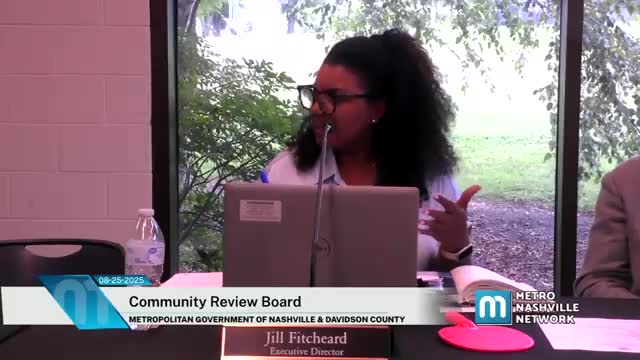
Summary
The Metropolitan Government of Nashville and Davidson County Community Review Board on its August meeting pressed city attorneys and police staff over repeated delays and denials in receiving body‑worn camera footage and other records after the Office of Professional Accountability (OPA) closed administrative investigations.
The Metropolitan Government of Nashville and Davidson County Community Review Board on its August monthly meeting pressed city attorneys and police staff over repeated delays and denials in receiving body‑worn camera footage and other records tied to closed administrative investigations. The board’s executive director reported an “uptick” in complaints and multiple cases where OPA had administratively closed a file but then refused to provide records to the board, citing Rule 16, the criminal‑procedure discovery rule. Board members and their legal counsel said the board’s oversight role requires access to administrative investigative materials and that Rule 16 should not be used as a blanket basis to deny records the board reviews. Why it matters: The board conducts statutory oversight of police administrative investigations. Members said denied access to body‑worn footage and other records prevents timely oversight, can lengthen case processing and erode public confidence. Board members discussed a plan to track each denial, notify the board’s attorney and escalate to the city solicitor and district attorney when necessary. Attorney Bridal told the board that Rule 16 is a criminal‑procedure tool and that prosecutors’ files often trigger the hold; he recommended the board provide a docket of every case where Rule 16 is invoked so counsel can press the matter with Glenn Funk and the district attorney’s office. Executive Director said she will provide the case list and notify counsel when denials occur. Board members repeatedly urged that, where OPA has closed its administrative review, the board should receive the investigative file (including any footage OPA relied on) because the board’s review is administrative, not criminal. Members described specific cases where body‑worn camera footage was not included in OPA links and where detectives, not OPA, later held or limited access to materials. Board action and next steps: The board directed staff to compile the cases where Rule 16 or similar denials have been used, route them to the board’s attorney, and, where appropriate, ask the district attorney’s office to facilitate release. Board counsel said the board will follow the MOU process and escalate to city legal staff if denials continue. Board members cautioned staff to flag denials immediately and to provide the legal team case identifiers so counsel can intervene. The board did not adopt new regulations at the meeting; it documented the concern and instructed staff and counsel to pursue the named cases with MNPD legal and the district attorney.