
Community Review Board says MNPD is delaying access to body‑worn camera footage, cites 'Rule 16' denials
Get AI-powered insights, summaries, and transcripts
Subscribe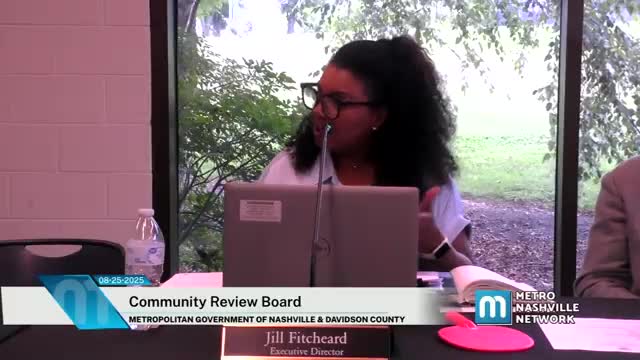
Summary
At its August monthly meeting the Nashville Community Review Board said it has encountered repeated delays and denials when requesting body‑worn camera footage and related records from MNPD, with officials and prosecutors citing “Rule 16” as a reason to withhold material the board needs to complete administrative reviews.
At its August monthly meeting the Metropolitan Government of Nashville and Davidson County Community Review Board said it has encountered repeated delays and denials when requesting body‑worn camera footage and related records from the Metropolitan Nashville Police Department, with MNPD staff and some prosecutors citing “Rule 16” as a reason to withhold materials the board says are needed to complete administrative reviews.
Board members and the board’s counsel described a pattern in which the Office of Professional Accountability (OPA) closes an administrative investigation but MNPD or prosecutors then deny the Community Review Board (CRB) access to footage or documents by citing Rule 16 of criminal procedure. The board’s executive director and outside counsel told the meeting they will notify the board’s attorney when that occurs so the matter can be elevated to the district attorney’s office and to other named contacts under the board’s memorandum of understanding (MOU).
Board members said the board’s role is a statutory, administrative review of OPA decisions and that the administrative review should not be delayed because a related criminal investigation remains pending. Attorney Bridal and other legal advisers at the meeting urged the board to compile case lists when Rule 16 is used to deny materials and to send those names to Glenn Funk, who the board identified as having signed the MOU and as the DA point of contact.
Speakers stated that some cases are more than a year old and that the board has cases that have reached the 45‑day mark specified in the MOU without a response from the chief. Board members said OPA investigators continue to report pushback when they try to obtain body‑worn camera footage and records, and recommended that staff notify counsel each time Rule 16 is invoked so counsel can pursue production via the district attorney if appropriate.
The board did not adopt a new formal policy at the meeting; members voted to continue using the MOU process and to notify counsel and the DA when record requests are denied. Board members asked staff to compile and forward the list of affected cases and dates to counsel for follow‑up.